
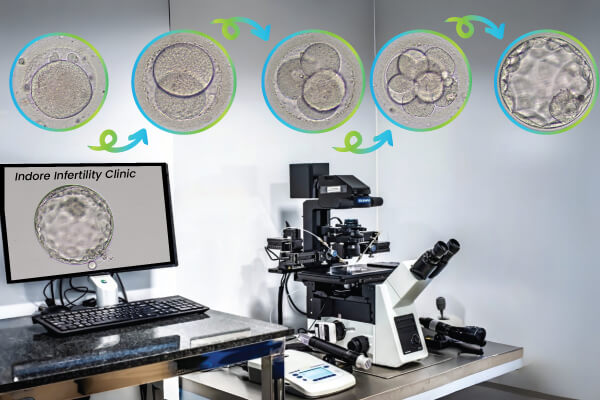
Embryo grading is an important part of IVF treatment. It helps embryologists assess the appearance and developmental characteristics of embryos and select embryos for transfer or freezing. Embryo grading can provide useful information to patients, but it is important to understand that medicine is not mathematics and embryo grading cannot guarantee pregnancy.
Introduction to Embryo Grading in IVF
Embryo grading is used to evaluate the quality of embryos produced after fertilization in the IVF laboratory. Embryologists assess embryos at different developmental stages and use characteristics such as cell number, symmetry and fragmentation to help determine developmental potential.
The grading process helps embryologists prioritize embryos that appear more suitable for embryo transfer. Understanding embryo grading can help patients better understand how embryo selection is performed during IVF.
What Is Embryo Grading?
Embryo grading is a system used by fertility specialists and embryologists to classify embryos according to their developmental and morphological characteristics. Depending on the developmental stage, assessment can include cell number, cell symmetry, fragmentation, blastocyst expansion, inner cell mass and trophectoderm quality.
Factors That Influence Embryo Quality
The source article groups the major factors affecting embryo quality into three broad areas: oocyte quality, sperm quality and the IVF laboratory environment.
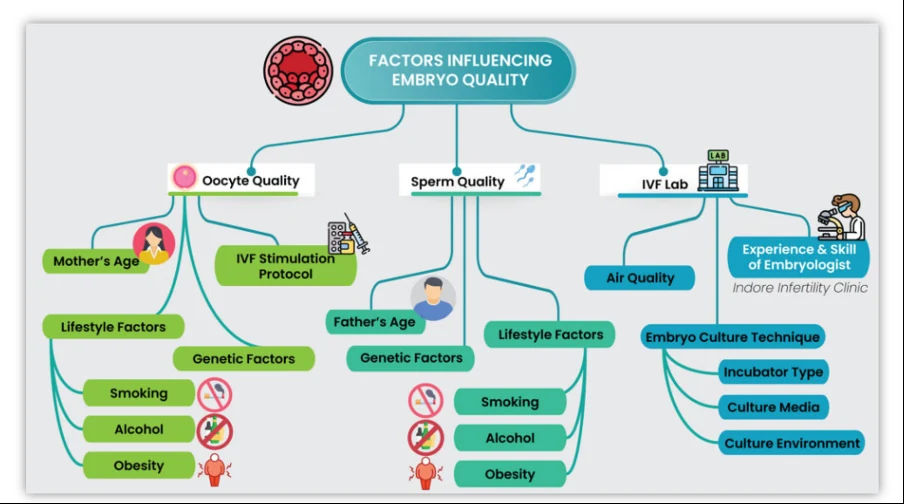
Factors Affecting Oocyte Quality
- Age of the woman can influence oocyte quality and chromosomal health.
- The ovarian stimulation protocol can affect oocyte maturity and quality.
- Smoking can negatively affect ovarian health and oocyte quality.
- Excessive alcohol consumption can interfere with hormonal balance and reproductive function.
- Obesity can be associated with hormonal changes and may affect follicular development and oocyte quality.
Factors Affecting Sperm Quality
- Paternal age can influence sperm quality.
- Smoking can affect sperm count, motility, morphology and DNA integrity.
- Alcohol consumption can negatively affect sperm production and quality.
- Obesity can affect testosterone levels, sperm production and sperm DNA integrity.
- Certain genetic factors can influence sperm quality.
IVF Laboratory Environment
- Controlled air quality is important for embryo culture.
- Incubator conditions influence embryo development.
- Culture media quality and composition play an important role.
- Temperature, pH and humidity need to be appropriately controlled.
- The experience and technical skills of the embryologist can influence embryo handling and development.
Why Is Embryo Quality Assessment Important?
Embryo quality assessment provides information that can help embryologists select embryos for transfer. Higher-quality embryos generally have better implantation potential, although embryo quality is only one factor influencing IVF outcomes. Maternal age, uterine health, paternal factors and other clinical factors can also affect the outcome.
Understanding the Embryo Grading Scale
Embryo grading depends on the developmental day and stage at which the embryo is assessed. Day 3 embryos are generally assessed at the cleavage stage, while Day 5 embryos are assessed at the blastocyst stage.
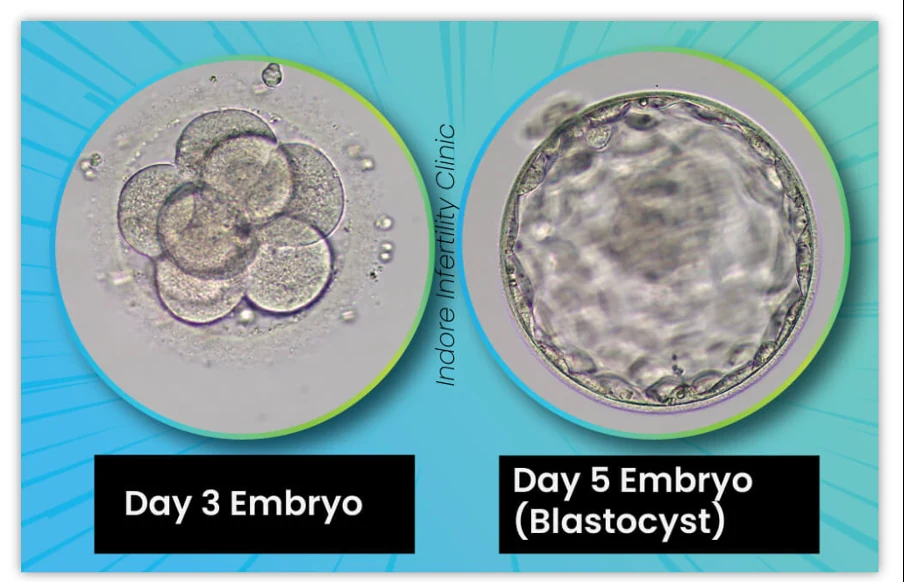
Day 3 Embryo Grading – Cleavage Stage
By Day 3, embryos are generally at the cleavage stage and commonly contain approximately 6 to 10 cells. Embryologists assess the number of cells, their relative symmetry and the degree of fragmentation.
- Cell number – the number of cells present at the time of assessment.
- Cell size and symmetry – embryos with more evenly sized cells are generally considered morphologically preferable.
- Fragmentation – small cellular fragments are assessed because higher levels of fragmentation may be associated with poorer embryo morphology.
- Developmental timing – the stage at which the embryo reaches a particular developmental milestone is also relevant.
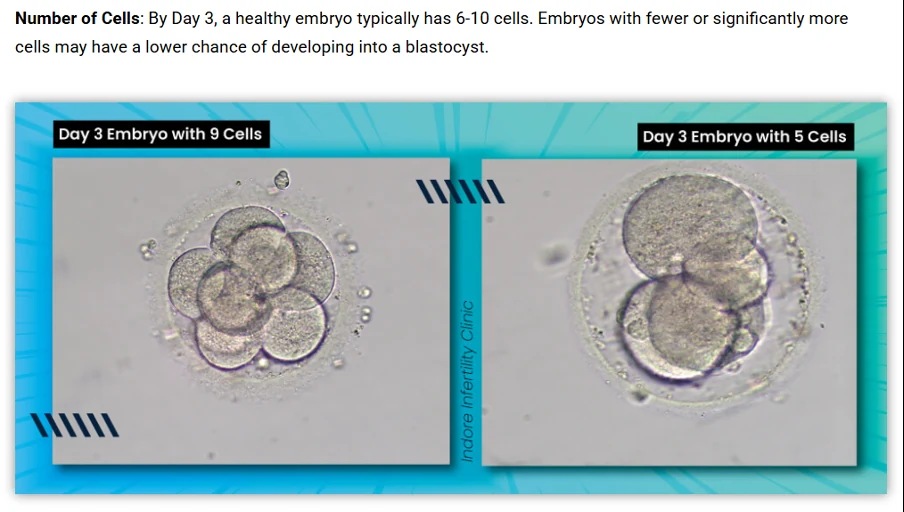
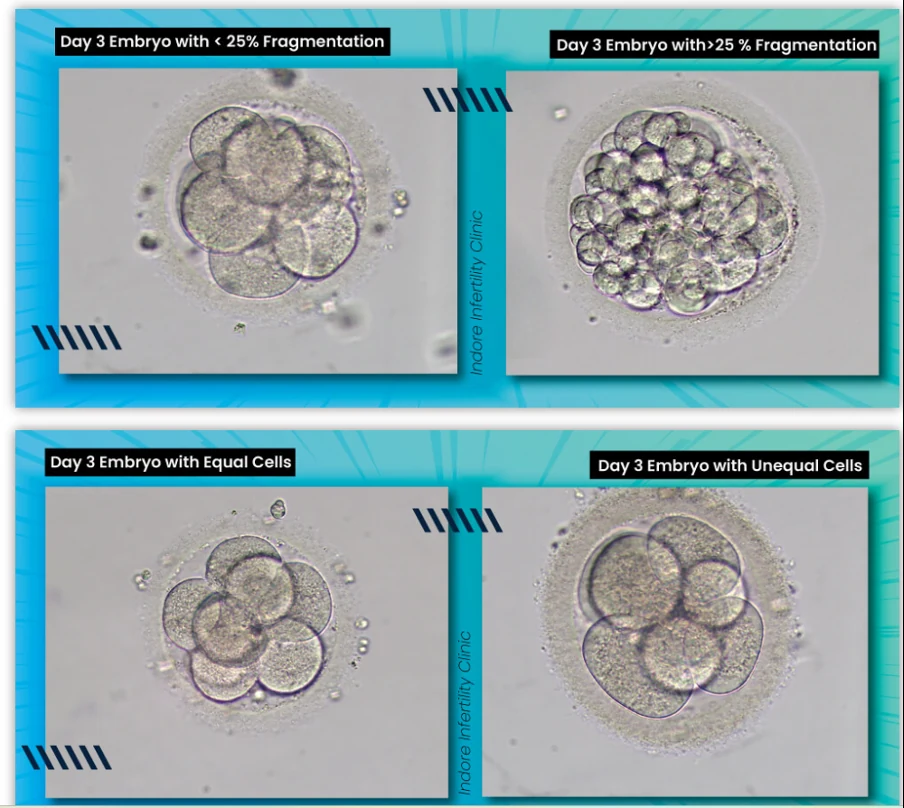
The source article refers to the Istanbul consensus as an important framework for cleavage-stage embryo assessment and notes that the consensus was updated in 2024.
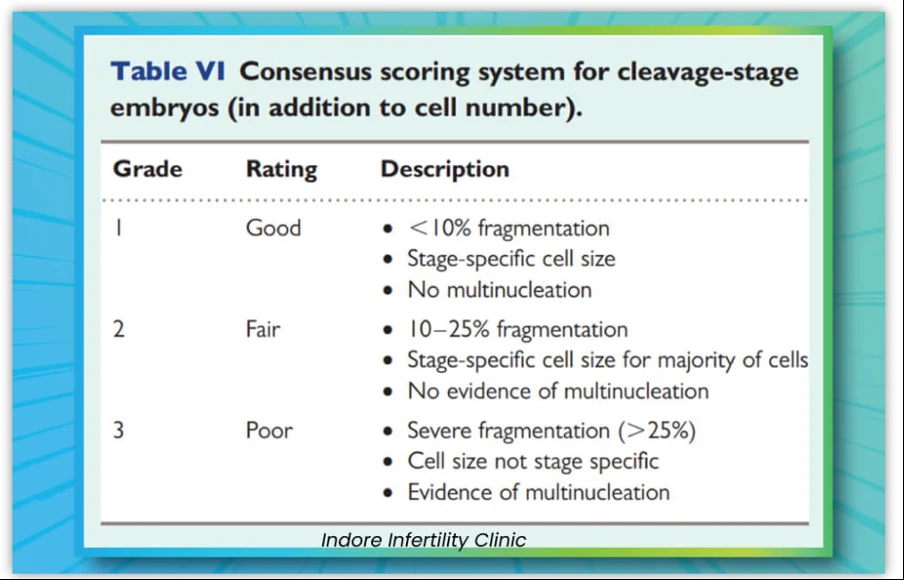
Day 5 Embryo Grading – Blastocyst Stage
By Day 5, embryos may reach the blastocyst stage. A blastocyst contains a fluid-filled cavity and two important cellular components: the inner cell mass (ICM), which contributes to the fetus, and the trophectoderm (TE), which contributes to the placenta.
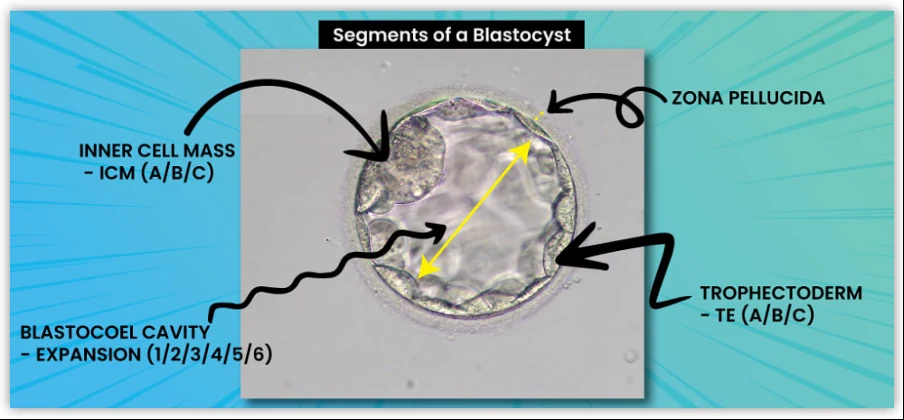
Gardner Blastocyst Grading System
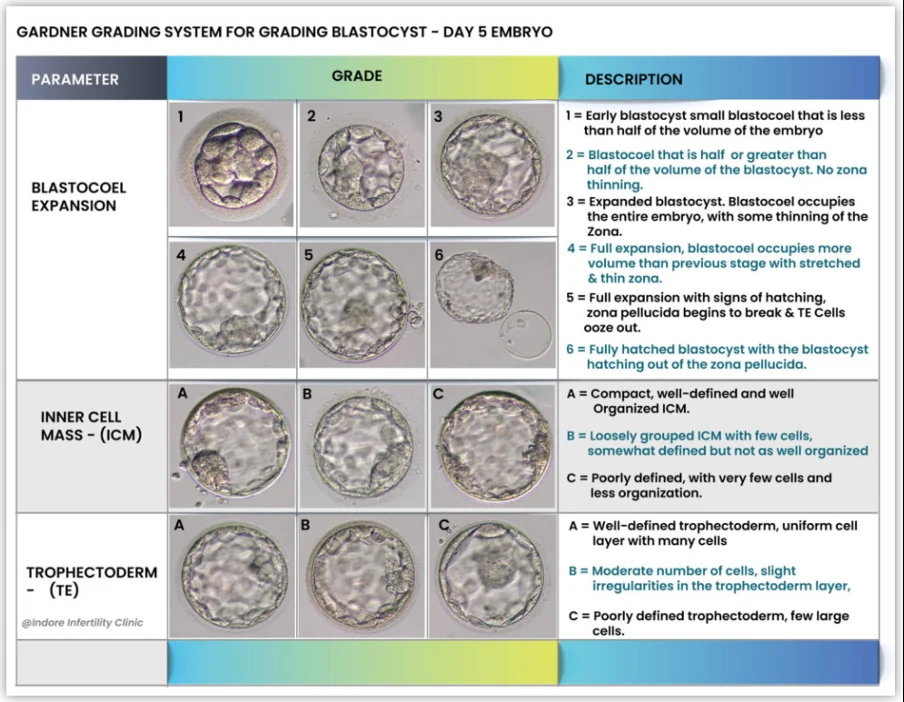
The source article describes the Gardner system as a widely used method for blastocyst assessment. The system evaluates blastocoel expansion and assigns letter grades to the inner cell mass and trophectoderm.
- Blastocyst expansion is graded on a numerical scale from 1 to 6.
- Inner cell mass (ICM) is graded using letters A, B or C.
- Trophectoderm (TE) is graded using letters A, B or C.
- A blastocyst grade such as 5AA therefore contains information about expansion, ICM quality and TE quality.
Factors Considered During Embryo Evaluation
- Cell number and symmetry
- Amount of fragmentation
- Developmental stage
- Blastocyst expansion
- Inner cell mass quality
- Trophectoderm quality
- Timing of embryo development and assessment
The source article emphasizes that developmental timing matters. For example, it discusses why a good-quality blastocyst that reaches the blastocyst stage earlier may have different developmental implications compared with a blastocyst of the same morphological grade that reaches the stage later.
Embryo Grading and IVF Success
Embryo morphology and grading are associated with implantation potential, and higher-grade embryos generally have better implantation prospects. However, embryo grade alone cannot determine whether an embryo will implant or result in a live birth.
The article also notes that lower-grade embryos can sometimes result in pregnancy. Therefore, embryo grading should be understood as a selection and assessment tool rather than a guarantee of IVF success.
Limitations of Embryo Grading
- Embryo grading is not a perfect predictor of IVF outcome.
- Different clinics and embryologists may interpret borderline embryos differently.
- Morphological grading does not directly reveal chromosomal or genetic status.
- The uterine environment and maternal health also affect implantation.
- Traditional grading mainly evaluates how an embryo looks at selected time points rather than its entire developmental history.
- Metabolic and other biological characteristics are not fully captured by conventional morphology-based grading.
Modern Technologies in Embryo Assessment
The source article discusses newer technologies that may complement traditional embryo grading, including time-lapse incubators, artificial intelligence and metabolomic approaches.
- Time-lapse imaging continuously records embryo development without repeatedly removing embryos from the controlled culture environment.
- AI-based assessment can analyze embryo images and developmental patterns.
- Metabolomic approaches attempt to evaluate metabolic characteristics associated with embryo development.
- These technologies are presented as tools that may complement embryologist assessment rather than completely replace clinical expertise.
Frequently Asked Questions About Embryo Grading
What Do Embryo Grades Such as 4AA or 5BB Mean?
A blastocyst grade combines information about blastocyst expansion, inner cell mass quality and trophectoderm quality. The numerical component describes expansion while the letters describe ICM and TE morphology.
Is a Higher-Grade Embryo Always Better?
Within the same developmental stage, a higher morphological grade is generally associated with better implantation potential. The source article also compares embryos according to their developmental day and emphasizes that timing matters.
Can Lower-Grade Embryos Result in a Healthy Pregnancy?
Yes. Lower-grade embryos can still implant and result in pregnancy and a healthy baby. Embryo grading provides a prediction based on morphology, but it cannot determine an individual embryo's outcome with complete certainty.
How Are Embryos Graded?
Embryologists typically examine embryos under an inverted microscope after carefully removing the culture dish from the incubator. The assessment is performed quickly to minimize exposure to changes in the controlled culture environment. The embryo is then graded according to its developmental stage.
Does Embryo Grading Predict Genetic Health?
No. Morphological embryo grading does not directly determine the chromosomal or genetic status of an embryo. Genetic assessment requires specialized testing such as PGT when clinically indicated.
Does Maternal Age Affect Embryo Quality?
The source article states that maternal age has an important relationship with oocyte quality and embryo development. With increasing maternal age, the likelihood of chromosomal abnormalities and changes in embryo development can increase.
Why Can Two Embryos With the Same Grade Have Different Outcomes?
- Genetic differences between embryos
- Epigenetic factors
- Embryo and endometrium interaction
- Timing of embryo transfer
- Embryo handling during transfer
- Endometrial thickness and uterine conditions
- Hormonal environment
Does the Experience of the Embryologist Matter?
According to the source article, embryologist experience can influence grading consistency and interpretation of subtle morphological differences. At the same time, grading remains partly subjective, which is one reason newer technologies such as AI-based assessment are being explored.
What Is the Role of AI in Embryo Grading?
- AI can analyze static embryo images or time-lapse recordings.
- AI may help standardize morphological assessment.
- AI can identify patterns in large datasets.
- AI may assist embryologists in embryo selection.
- AI does not directly replace genetic testing.
- AI should currently be considered a decision-support tool rather than a guaranteed predictor of pregnancy.
Can Embryo Grading Detect Chromosomal Abnormalities?
Embryo grading alone cannot detect chromosomal abnormalities. The article explains that tests such as PGT-A are used when genetic or chromosomal assessment is clinically appropriate.
Fresh vs Frozen Embryo Transfer
Embryos with the same morphological grade may have different outcomes in fresh and frozen transfer cycles because uterine conditions, hormonal environment and synchronization between embryo and endometrium can differ.
Can IVF Stimulation Protocol Affect Embryo Grade?
The source article states that ovarian stimulation protocols can influence oocyte maturity and quality and consequently affect embryo development. The selection of stimulation protocol should therefore be individualized according to the patient's clinical situation.
Can Embryo Quality Contribute to IVF Failure?
Embryo quality can contribute to IVF failure, but IVF failure is multifactorial. Uterine receptivity, hormonal factors, embryo transfer technique and other clinical factors can also contribute.
What Does Embryo Fragmentation Mean?
Fragmentation refers to small cellular fragments observed during embryo development. Greater fragmentation may be associated with poorer morphology, while mild fragmentation can occur in developing embryos.
What Does Arrested Embryo Development Mean?
Arrested development means that an embryo stops progressing at a particular developmental stage. The article discusses possible associations with oocyte quality, sperm quality, genetic abnormalities and laboratory culture conditions.
Can Lower-Grade Embryos Survive Freezing and Warming?
The source article states that lower-grade embryos may have a lower likelihood of surviving cryopreservation compared with higher-grade embryos, although improvements in vitrification have improved embryo survival during freezing and warming.
Can Lifestyle Changes Improve Embryo Quality?
- Maintain a balanced diet.
- Exercise regularly according to medical advice.
- Avoid smoking and alcohol.
- Discuss caffeine intake with the treating doctor.
- Review hormonal health and thyroid function where clinically appropriate.
- Discuss supplements such as CoQ10, DHEA or folic acid with a doctor before using them.
- Review the stimulation protocol with the fertility specialist.
- Ensure appropriate embryo culture and handling by an experienced IVF laboratory team.
Can Assisted Hatching Improve Outcomes?
The source article notes that evidence regarding assisted hatching for poor-quality embryos is mixed and that its effectiveness may depend on embryo and uterine factors.
Does Embryo Grade Affect Twin Pregnancy?
Embryo grading itself does not directly create a twin pregnancy. However, transferring more than one embryo can increase the possibility of multiple pregnancy. Rarely, a single embryo can divide and result in monozygotic twins.
What Is the Role of ICM?
The inner cell mass is the group of cells within the blastocyst that contributes to fetal development. Its appearance and organization are important components of blastocyst grading and are assigned grades such as A, B or C.
What Is the Role of Trophectoderm?
The trophectoderm is the outer cell layer of the blastocyst and contributes to placental development. Its cellular appearance and organization form another major component of blastocyst grading.
Can Embryo Grade Change During Development?
Yes. Embryo morphology can change as development progresses. The source article discusses changes associated with intrinsic embryo characteristics, culture conditions and developmental processes.
What If None of the Embryos Are High-Grade?
The source article explains that a lower-grade embryo can still have implantation potential. The decision about whether and which embryo to transfer should be discussed with the fertility specialist and embryologist based on the individual IVF cycle.
Does Bleeding After Embryo Transfer Mean the Embryo Is Poor Quality?
No. Bleeding or spotting after embryo transfer is not necessarily an indication of poor embryo quality. It can occur for several reasons during IVF treatment. Heavy bleeding should be medically evaluated.
Can a High-Grade Embryo Still Fail to Implant?
Yes. A high-grade embryo can still fail to implant because embryo morphology does not capture every genetic, biological or uterine factor that influences implantation.
Can Poor-Grade Embryos Result in a Healthy Baby?
Yes, a lower-grade embryo can sometimes implant and result in a healthy pregnancy. However, the source article notes that lower grades are generally associated with lower implantation potential.
Final Takeaway
Embryo grading is an important tool used during IVF to assess embryo morphology and assist with embryo selection. Day 3 and Day 5 embryos are assessed differently, while blastocyst grading commonly considers expansion, inner cell mass and trophectoderm. However, embryo grade is not a guarantee of pregnancy or genetic health. Modern technologies such as time-lapse imaging and AI may complement conventional assessment, but clinical interpretation by experienced fertility professionals remains important.
You might also like





Written by
Dr. Gajendra Tomar
Fertility Specialist & Unit Head
Dr. Gajendra Singh Tomar (MD, MRCOG) is the Unit Head and a fertility specialist at Indore Infertility Clinic, with over two decades of experience in obstetrics, gynaecology and reproductive medicine. He founded the clinic and has performed more than 2,500 ovum pick-ups and 3,500 embryo transfers.
Indore Infertility Clinic & IVF Center
239 – B, Anoop Nagar, Indore, Madhya Pradesh, India
Have questions about your treatment? Talk to our team.