01
Sperm Retrieval
TESA or PESA procedure

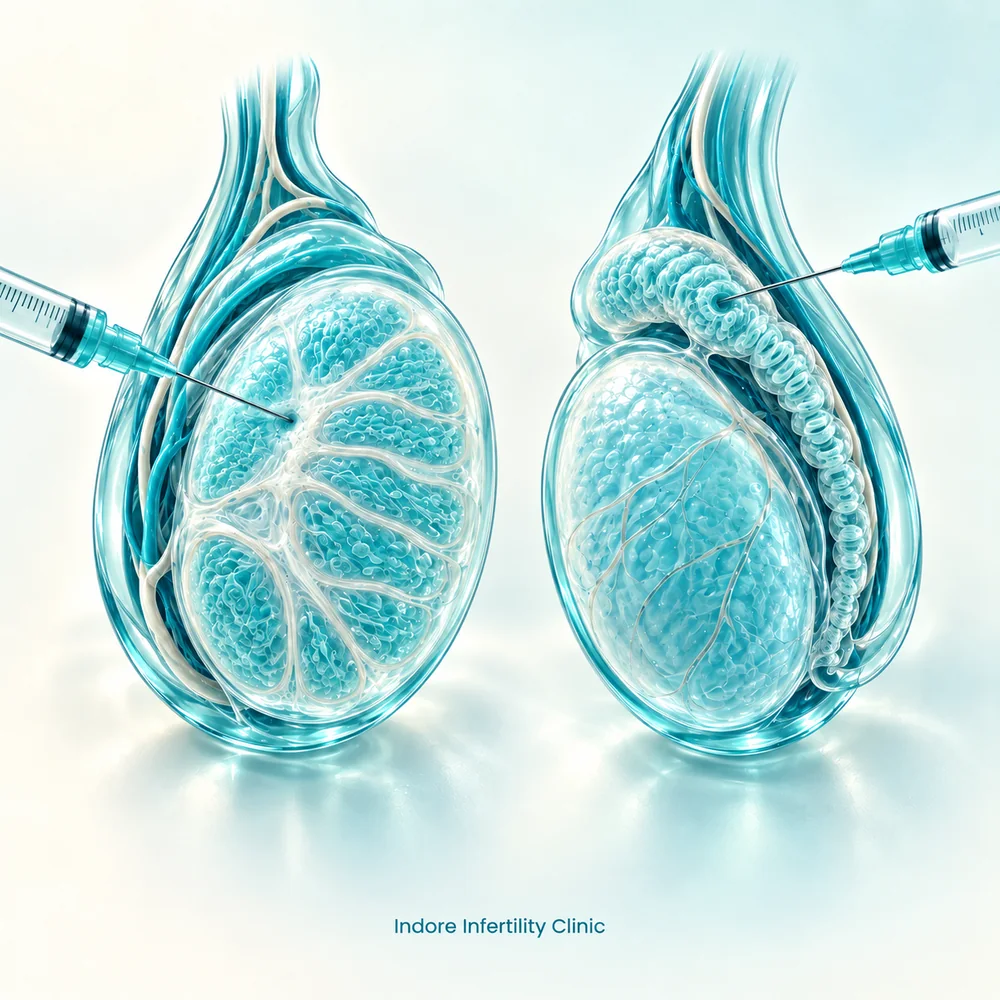
TESA and PESA are sperm retrieval procedures used to obtain sperm directly from the male reproductive system when sperm are not present in the ejaculate or cannot be obtained through a conventional semen sample. The retrieved sperm may be used for assisted reproductive treatment such as Intracytoplasmic Sperm Injection (ICSI), depending on the clinical situation.
Azoospermia are of two types, one where sperms are not produced within the testes, this condition is called non obstructive azoospermia and one where sperms are produced within the testes but due to obstruction in the path the sperms are unable to come out in the ejaculate. This type of azoospermia is called obstructive azoospermia.
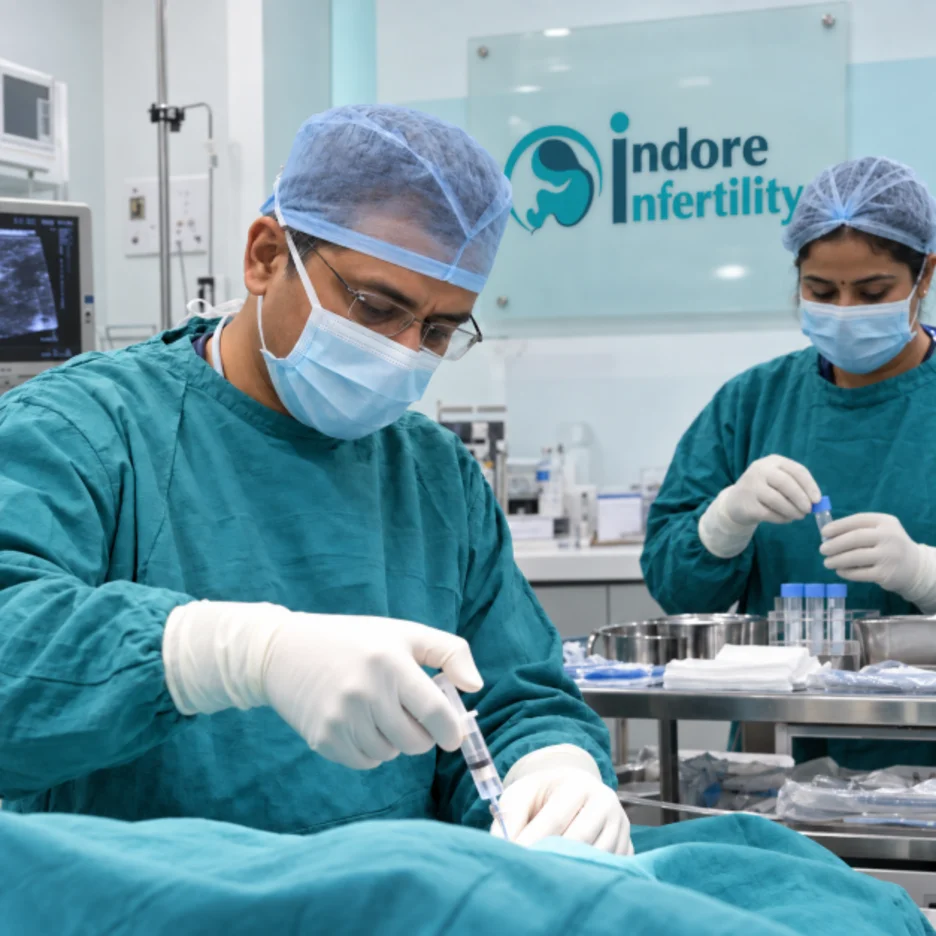
TESA or PESA is performed by a trained Andrologist or IVF Specialist who will perform the procedure under local anesthesia or general anesthesia, a scalp vein or thin needle is inserted in the region of Testicles or Epididymis. Suction is created and the aspirated fluid or tissue is examined for presence of sperms under the microscope.
The prognosis of finding sperm for obstructive azoospermia is very good. Typically for obstructive azoospermia, surgical sperms are retrieved without much problem. Such sperms are then prepared in IVF lab and used for fertilizing the oocytes.
It is a minimally invasive procedure, hardly takes a few minutes and does not leave a scar etc.
There are no long term side effects of TESA or Surgical Sperm Retrieval procedure whatsoever.
Side effects of anaesthesia though rare are known to exist and should always be kept in mind. Nausea, vomiting etc. may be experienced in the day of the surgery because of anaesthetic agents but usually this subside after 6-8 hours.
Patients undergoing TESA or Surgical sperm retrieval usually feel absolutely normal within 3 to 4 hours of the surgery and are ready to go home. TESA is a daycare procedure and rarely needs hospitalization.
A diagnostic Testicular or epididymal sperm aspiration can be performed anytime. It confirms the presence of normal, motile sperms in the aspirate and also creates an opportunity for semen cryopreservation.
If already confirmed in the past, TESA can be carried out on the day of OPU (Oocyte retrieval). The sperms obtained are used on the same day for fertilizing oocytes by ICSI.
Many IVF specialists prefer to get the TESA done before the Ovum pick up or egg retrieval so that the sperms retrieved can be processed in lab longer. However performing TESA immediately after ovum pickup can also result in good fertilization.
Patients who present with very severe form of OATS ( Oligo Astheno Teratozoospermia), the ejaculate typically contains less than 2 Million count and shows very poor Motility (less than 10%) and very poor morphology ( less than 1% normal forms). In such severe cases it might be beneficial to extract sperms surgically as they would have lesser damage. Many studies have shown that testicular sperm are of better quality than the sperms retrieved from the ejaculate.
ICSI with testicular sperm in case of severe OATS patients have shown to form better embryos.
Patients with cryptozoospermia, that is patients whose semen analysis shows few sperms occasionally also benefit from TESA as testicular sperms will have lesser degree of damage.
Sperms that are extracted surgically by either TESA or PESA can be cryopreserved for future use.
Cryopreservation of rare sperms can be achieved in good IVF labs. Talk to your IVF specialist about the same and discuss beforehand if you want to freeze sperms.
The cost of TESA is usually over and above the IVF cycle. To know the exact cost please visit the link below.
Please refer the following Quick Reference Chart for knowing the cost of this procedure
Cost of TreatmentTESA and PESA require careful clinical planning and laboratory coordination. The retrieved sample is immediately assessed and processed to identify usable sperm for fertility treatment.
TESA or PESA procedure

Sperm identification and preparation
Find answers to common questions about sperm extraction, preparation, recovery, ICSI and treatment outcomes.
TESA stands for Testicular Sperm Aspiration. A fine needle is used to aspirate sperm-containing tissue directly from the testicle so that sperm can be examined and, when suitable, used for assisted reproduction.
PESA stands for Percutaneous Epididymal Sperm Aspiration. A fine needle is used to retrieve sperm from the epididymis, particularly in selected cases where sperm production is present but sperm cannot reach the ejaculate.
TESA or PESA may be considered for selected men with azoospermia, obstructive causes of male infertility, previous vasectomy or situations where usable sperm cannot be obtained through a conventional semen sample.
PESA retrieves sperm from the epididymis, while TESA retrieves sperm-containing tissue directly from the testicle. The appropriate method depends on the underlying diagnosis and specialist assessment.
Yes. When viable sperm are successfully retrieved and considered suitable by the fertility laboratory, they may be used for ICSI as part of an IVF treatment cycle.
The procedure is performed with appropriate local or other anesthesia according to the clinical plan. Some temporary discomfort, tenderness or swelling may occur after the procedure.
Recovery varies between individuals and depends on the procedure and clinical circumstances. Your specialist will provide specific instructions about rest, activity and follow-up after sperm retrieval.
If usable sperm are not identified, the fertility specialist may discuss alternative sperm-retrieval approaches or other reproductive options depending on the underlying cause and the couple's treatment plan.
Appropriately collected and stored sperm may be frozen and later used for assisted reproduction when the fertility laboratory confirms that the sample is suitable.
No. Sperm retrieval is intended to obtain sperm for assisted reproduction. Pregnancy depends on several additional factors, including sperm and egg quality, embryo development, age and reproductive health.
Take the first step towards parenthood with compassionate care, expertise, and support tailored to your unique needs.