01
Diagnostic Laparoscopy
Direct Pelvic Examination

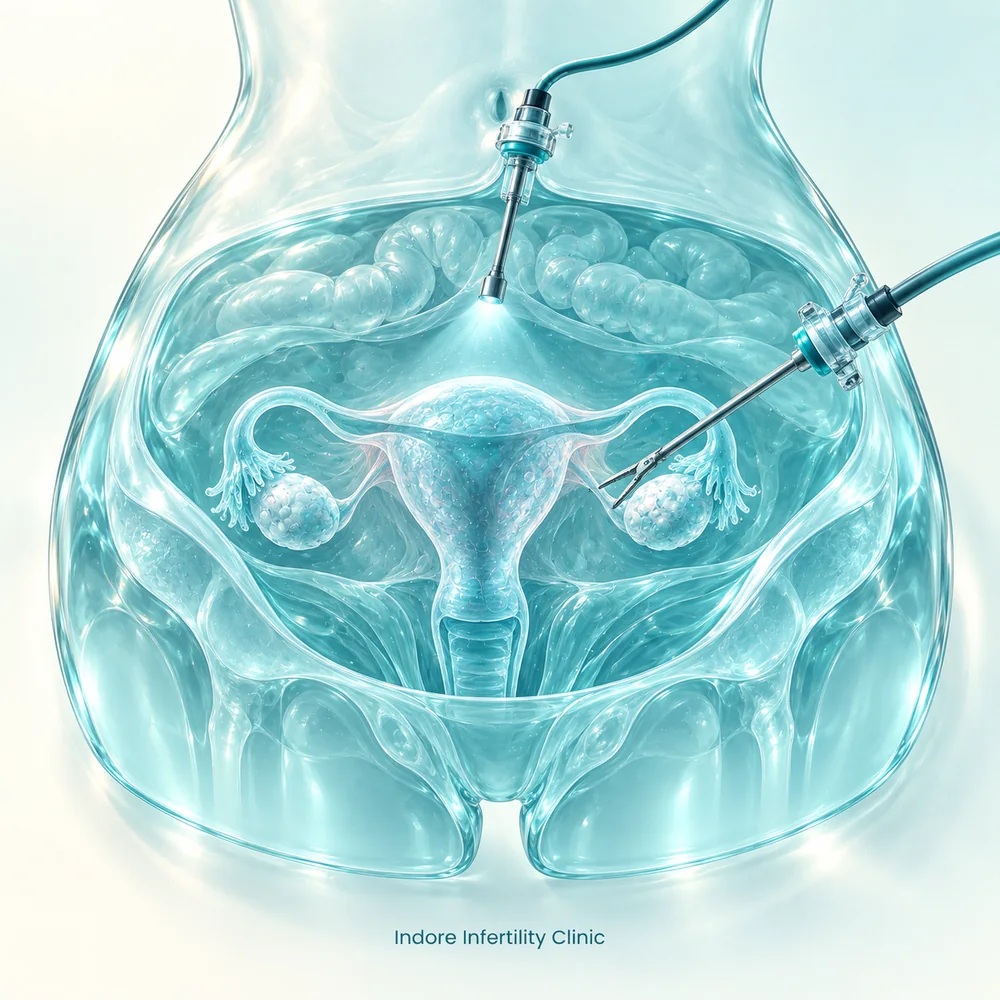
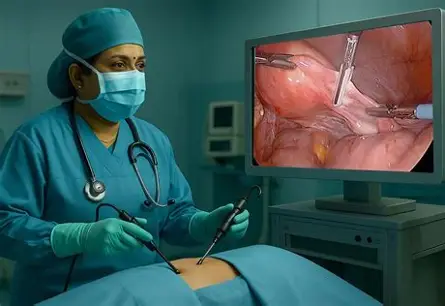
Laparoscopy is a minimally invasive surgical procedure in which a narrow telescope-like instrument called a laparoscope is inserted through a small incision, usually around the belly button. It allows the doctor to directly visualize the abdominal and pelvic organs, including the uterus, fallopian tubes and ovaries. In fertility evaluation, laparoscopy can provide a detailed view of the reproductive organs and surrounding pelvic structures and may help identify conditions such as endometriosis, adhesions, scar tissue, fibroids and abnormalities affecting the fallopian tubes. When appropriate, dye may also be passed through the cervix to assess whether the fallopian tubes are open. Because laparoscopy can be both diagnostic and operative, certain abnormalities identified during the examination may also be treated during the same procedure when medically suitable.
Laparoscopy is a surgical procedure that involves insertion of a narrow telescope-like instrument through a small incision in the belly button. This allows visualization of the abdominal and pelvic organs including the area of the uterus, fallopian tubes and ovaries.
This procedure allows us to determine whether there are any defects such as scar tissues, endometriosis, fibroid tumors and other abnormalities of the uterus, fallopian tubes and ovaries.
In case any defects are found during the laparoscopic procedure, then they can sometimes be corrected with operative laparoscopy which involves placing instruments through ports in the scope and through additional, narrow (5 mm) ports which are usually inserted at the top of the pubic hair line in the lower abdomen.
Since a Laparoscopic procedure is invasive in nature and involves some cost, it usually is not the FIRST test in a couples diagnostic evaluation.
However sometimes due to individual patient history (For example: Prolonged marital life, Advanced maternal age) this test may be suggested by doctors to avoid wastage of time in case of advanced age.
Some causes of infertility, like endometriosis, can only be diagnosed through laparoscopy. Laparoscopy allows your doctor to not only see what’s inside your abdomen, but also gives an opportunity to treat some causes of infertility, allowing you a better chance at getting pregnant either naturally or with fertility treatments.
Laparoscopy allows direct visualization of the uterus, fallopian tubes, ovaries and surrounding pelvic structures to identify conditions that may affect fertility.
Direct Pelvic Examination
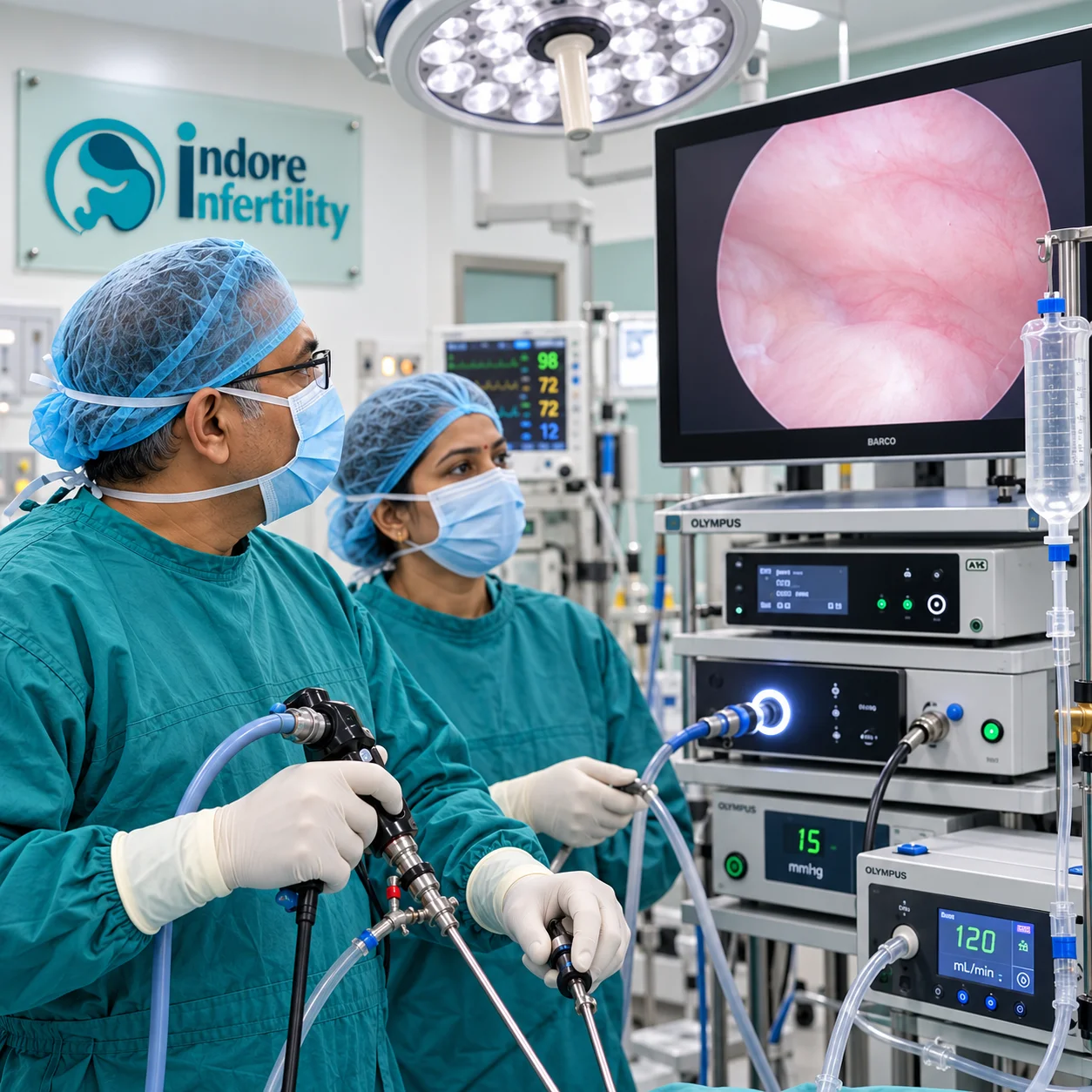
Minimally Invasive Surgical Examination
Laparoscopy is performed in a hospital, under general anesthesia. Your infertility doctor will give you instructions on how to prepare for surgery beforehand. You will be told not to eat or drink for 8 or more hours before your scheduled surgery, and you may be instructed to take antibiotics.
You’ll receive an IV, through which fluids and medication to help you relax will be delivered. The anesthesiologist will place a mask over your face, and after breathing a sweet smelling gas for a few minutes, you’ll fall asleep.
Once the anesthesia has taken effect, the doctor will make a small cut around your belly button. Through this cut, a needle will be used to fill your abdomen with carbon dioxide gas. This provides room for your doctor to see the organs and move the surgical instruments. Once your abdomen is filled with gas, the surgeon will then place the laparoscope through the cut to look around at your pelvic organs.
Sometimes two or three more small cuts are made, so that other thin surgical instruments can be used to make repairs or move the organs around for a better view.
Complications include the possibility of damage to other structures in the pelvis such as the bladder, ureter, bowel and blood vessels. Unexpected open surgery (larger incision) is always a possibility, but is very rare. Some common complications include bladder infection after surgery, skin irritation around the incision.
Any surgery can have an anesthesia-related complication or be associated with post-operative infection, such as a skin infection at the incision site.
Fortunately, all of these complications are very unusual when laparoscopy is expertly performed on healthy women.
Please refer the following Quick Reference Chart for knowing the cost of Laparoscopy at our centre
Cost of TreatmentFind answers to common questions about laparoscopy, infertility evaluation, preparation, risks and treatment.
Laparoscopy is a surgical procedure in which a narrow telescope-like instrument called a laparoscope is inserted through a small incision, usually around the belly button. It allows direct visualization of abdominal and pelvic organs including the uterus, fallopian tubes and ovaries.
Laparoscopy can help identify abnormalities such as scar tissue, endometriosis, fibroids and other problems involving the uterus, fallopian tubes and ovaries. It can also provide an opportunity to treat certain abnormalities during operative laparoscopy.
Yes. The clinic source specifically states that some causes of infertility, such as endometriosis, can be diagnosed through laparoscopy.
Yes. Dye can be pushed through the cervix during laparoscopy. If the dye comes out through the fimbrial end of a tube, it indicates that the tube is patent. The source also lists blocked tubes as an abnormal finding.
Yes. Laparoscopy allows direct visualization of the ovaries and their relationship with the fallopian tubes and surrounding pelvic structures.
The clinic source describes normal findings as a normal-looking external uterus, tubes and ovaries with a normal relationship between the tubes and ovaries. The fimbrial ends of the tubes should also appear normal, and dye passing through the tubes indicates tubal patency.
Abnormal findings can include an abnormal size or shape of the external uterus, scar tissue outside the uterus, a blocked fallopian tube, or adhesions around the tube or ovary that distort the tubo-ovarian relationship.
Possible complications include injury to the bladder, ureter, bowel or blood vessels, bladder infection, skin irritation around the incision, postoperative infection and anaesthesia-related complications. Unexpected conversion to open surgery is possible but very rare.
Laparoscopy is an established surgical procedure, but it is invasive and has potential risks. The clinic source states that these complications are very unusual when laparoscopy is expertly performed on healthy women.
Yes. Like other surgical procedures, laparoscopy can be associated with postoperative infection, including infection at the skin incision. Bladder infection is also listed as a possible complication.
Rarely, pelvic structures such as the bladder, ureter, bowel and blood vessels can be injured during laparoscopy. These are recognised surgical risks.
Depending on the abnormality and the planned procedure, the surgeon may be able to treat or correct certain findings using additional instruments introduced through small ports. This is called operative laparoscopy.
Laparoscopy itself is a diagnostic and surgical procedure rather than a guaranteed fertility treatment. The clinic source states that identifying and treating certain causes of infertility may provide a better chance of getting pregnant naturally or with fertility treatments.
The main Indore Infertility Clinic laparoscopy page does not state a fixed amount in its text. It directs patients to the centre's Quick Reference Chart for the current cost of laparoscopy or laparoscopic surgery.
Take the first step towards parenthood with compassionate care, expertise, and support tailored to your unique needs.