
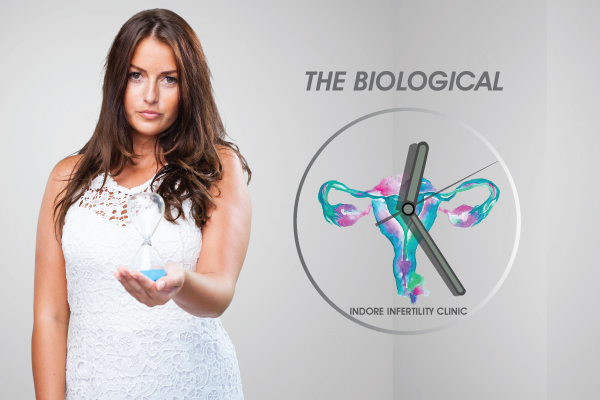
When it comes to female Ovaries, AGE is not just a NUMBER
Ovaries are considered to be the most dynamically changing organ of human body. It is the last organ to become active yet the first to lose it’s basic function. The ovary is strongly influenced by what is happening to the rest of the body and Age is the single most important factor affecting Female Fertility. Three important factors that influence the ovaries and hence the fertility with increasing maternal age are:
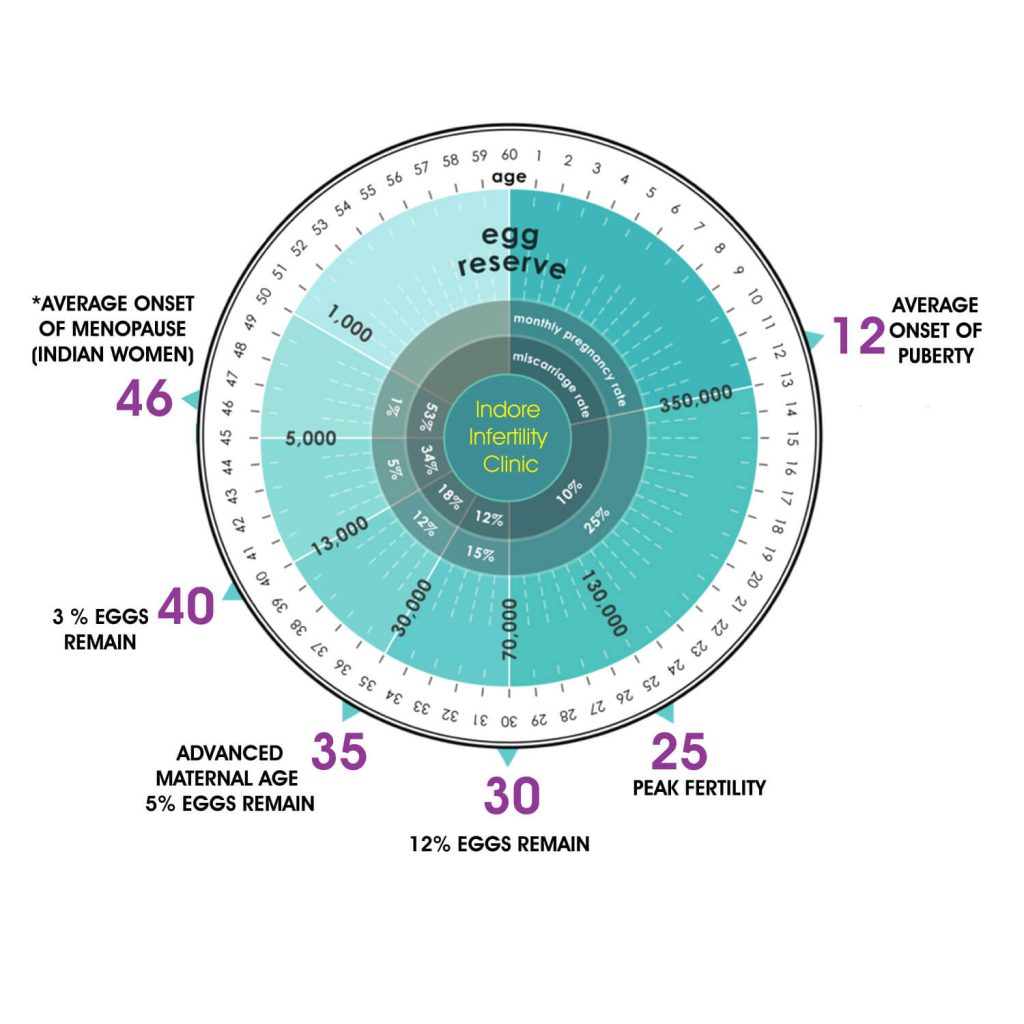
Reduction in ovarian Reserve A female is born with limited number of eggs at birth and with each menstrual cycle, she ovulates one or two follicles. With age the inbuilt reservoir of oocytes / eggs keeps on depleting. As shown in the graph below, by age 30 a female is left with only 12% of her total ovarian reserve and the number keeps on reducing drastically after 35.
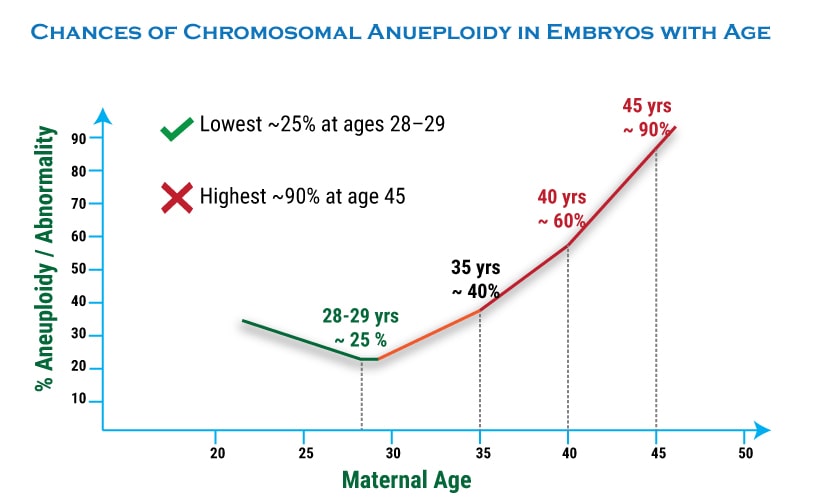
Increase in incidence of Aneuploidies Aneuploidies are defined as error in chromosome numbers within a cell. Every cell in our body has 23 pairs of chromosomes i.e 46 total chromosomes. Aneuploidies occur when the resultant zygote has a number different from 46 due to either loss or gain of chromosomes. Increased maternal age results in impaired process of cell division which leads to flaws in segregation of chromosomes, hence causing Aneuploidies in oocytes. It is estimated that by age of 35 years, approximately 40% of oocytes or eggs have Chromosomal Error (aneuploidies) resulting in impaired embryo formation.
Decreased Mitochondrial function Mitochondria are organelles (parts) of cell that provide energy for various metabolic functions of the cell and hence called the powerhouse of cells. An average oocyte contains about 1000000 mitochondria. Advanced maternal age impacts the quantity and quality of mitochondria, which in turn impacts the ability of the oocyte to perform it’s basic function that is develop into an embryo after fertilization by sperm. There is strong evidence that advanced maternal age causes early development failure of embryos and hence even if they are fertilized, they may not reach the advanced Blastocyst stage.
Fertility preservation by cryopreservation of oocytes seems to be the most promising advancement in Assisted Reproduction, which allows a female to preserve her eggs while she is still young and use them for achieving pregnancy during later years. Another practical option that could be opted by young couple is to cryopreserve embryos while they are younger and perform Frozen Embryo Transfer when they are ready for parenthood. Here’s a short video showing how a Frozen Embryo Transfer is performed in the IVF Lab.
You might also like



Written by
Dr. Gajendra Tomar
Fertility Specialist & Unit Head
Dr. Gajendra Singh Tomar (MD, MRCOG) is the Unit Head and a fertility specialist at Indore Infertility Clinic, with over two decades of experience in obstetrics, gynaecology and reproductive medicine. He founded the clinic and has performed more than 2,500 ovum pick-ups and 3,500 embryo transfers.
Indore Infertility Clinic & IVF Center
239 – B, Anoop Nagar, Indore, Madhya Pradesh, India
Have questions about your treatment? Talk to our team.