01
Sperm DFI Analysis
Non-Fragmented, Fragmented & Degraded Sperm


DNA Fragmentation Index (DFI) is a sperm function test that measures the integrity of sperm DNA. Damaged or fragmented DNA may affect fertilization, embryo development and reproductive outcomes. DFI provides additional information about sperm quality that may not be identified through routine semen analysis and can help fertility specialists evaluate selected male-factor infertility cases. Results are interpreted along with semen analysis, medical history and the couple’s overall fertility situation. The test may provide useful insights when fertility difficulties remain unexplained despite routine investigations. Based on the findings, the fertility specialist may recommend appropriate lifestyle measures, further evaluation, or treatment options when required.
The full form of DFI test is DNA Fragmentation Index test. It is a test that measures the integrity of DNA present in the sperm’s head.
In simple words, the DNA of sperm is stored in sperm’s head within long thread like structure called chromosomes. During the process of formation of sperm the DNA come together to form a chromosome. This process when becomes a bit faulty, it leads to breaks in the DNA strand and hence impacts the DNA replication during fertilization and formation of embryos.
The primary function of a sperm is to deliver male genetic material to the egg, and therefore the quality of the DNA delivered is of clear importance to the developing embryo and pregnancy success.
Standard semen analysis generally provides information about the sperm quality as a delivery vessel (i.e. motility, concentration, morphology) but does not directly assess what is being delivered, namely the DNA. One way of assessing the quality or “integrity” of sperm DNA is by measuring the fragmented sperm DNA (DNA breaks).
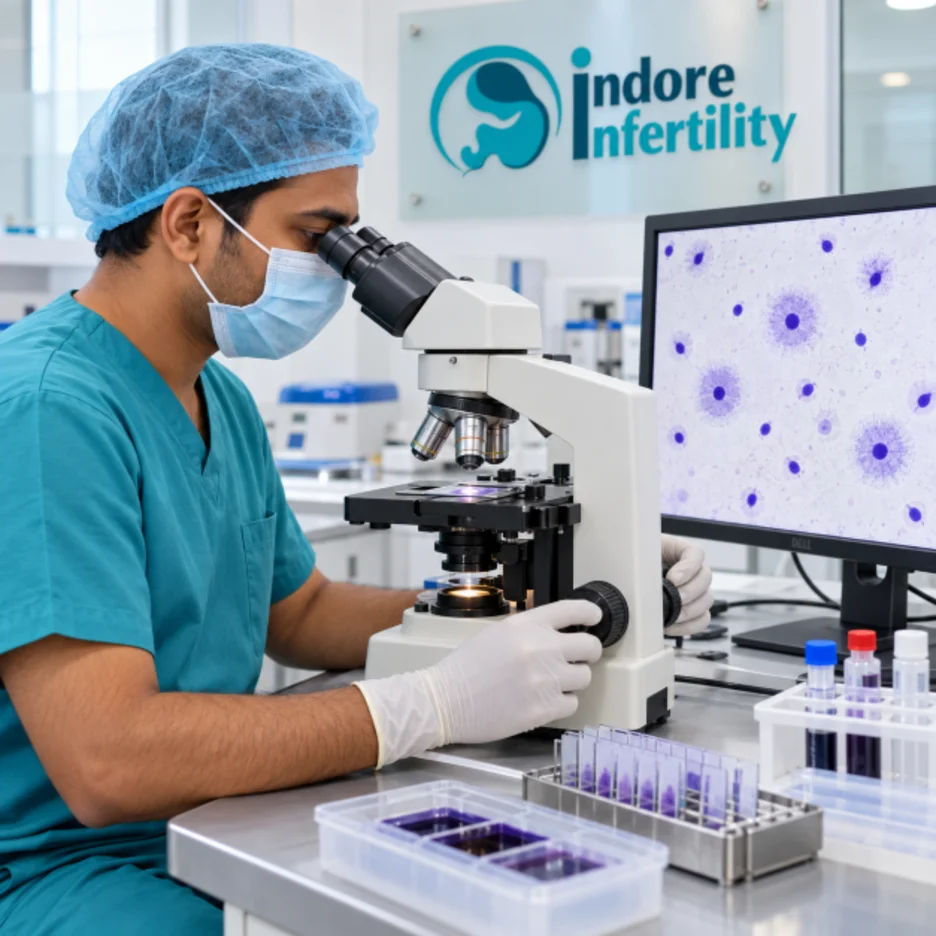
The DFI test or DNA Fragmentation Index test is performed at Indore Infertility Clinic to assess the number of DNA breaks and hence provides more insight to the sperm quality. This male sperm function test is typically done in andrology lab associated with IVF Clinics. At our ivf centre at Indore we perform Sperm DNA Fragmentation using Sperm Chromatin Dispersion technique which is precise in locating sperm with high DNA fragmentation index.
The DFI test at our IVF clinic in Indore takes 3 to 4 hours to perform.
At Indore Infertility Clinic, sperm DNA fragmentation is evaluated using the Sperm Chromatin Dispersion (SCD) assay. The technique uses controlled DNA denaturation and laboratory reagents before the sperm are viewed under a microscope.
Non-Fragmented, Fragmented & Degraded Sperm
Sperm DNA Damage
Sperm quality is dependent on the amount of damage to the sperm DNA or DNA fragmentation. Sperm DNA fragmentation has little or nothing to do with the parameters that we measure on the routine semen analysis.
However, the degree of DNA fragmentation correlates very highly with the inability of the sperm to initiate a birth regardless of the technology used to fertilize the egg such as IUI insemination, IVF / ICSI.
By testing for sperm DNA fragmentation, many cases of formally “unexplained” infertility can now be explained by even the best Infertility Specialist in Indore.
DFI test is usually done by the andrology labs associated with any good IVF Center in Indore. The patient is expected to give a semen sample at the IVF lab and DFI test report typically takes 4 to 5 hours.
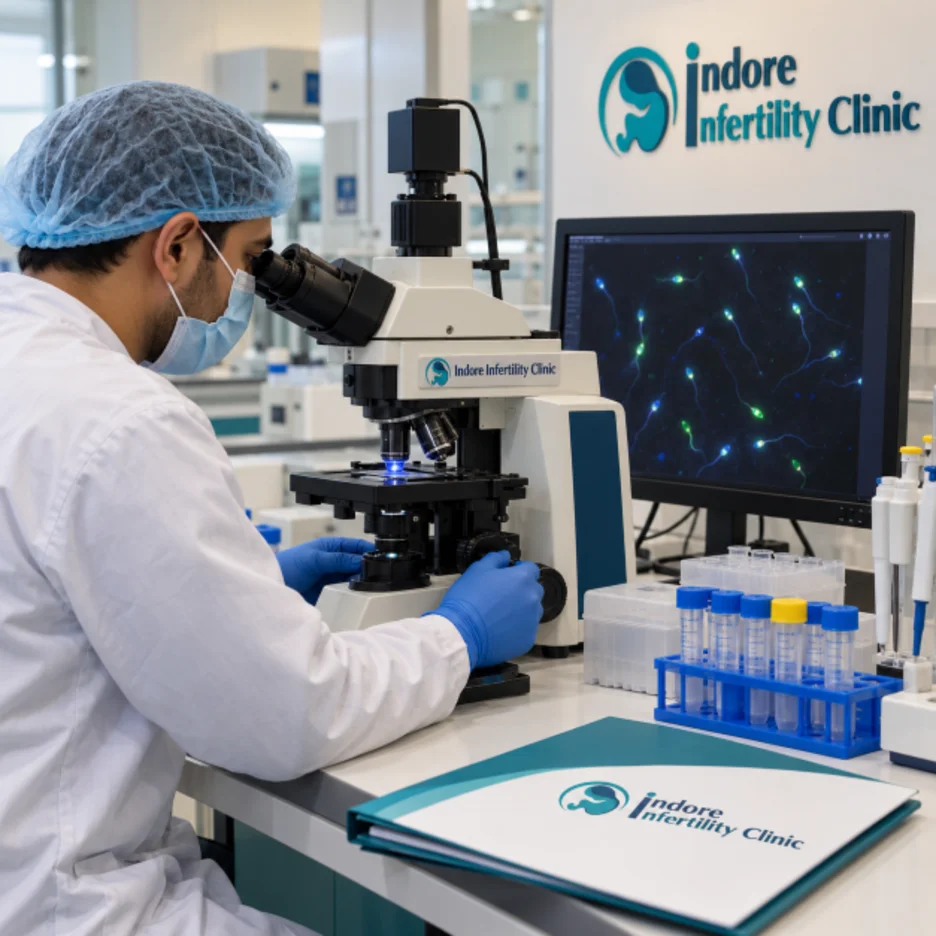
To test for sperm DNA fragmentation at our IVF centre in Indore; we use the Sperm Chromatin Dispersion Assay (SCD). SCD uses the process of controlled DNA denaturation process to remove the protein contained in sperm by making use of heat and other reagents. After the completion of the various steps, normal sperm creates halo while the fragmented sperms are the ones without a Halo when Viewed under a microscope.
At our IVF center in Indore, the test is performed by Andrology technician but the DFI results are verified by the best Embryologist in Indore so that we can generate accurate reports for the same.
There are other ways of testing the sperm DFI but most of the IVF clinic’s use this method of testing as it is highly reliable.
Book Appointment for DFI Test
Book DFI Test
A normal semen sample has less then 15% of the sperm with DNA damage. Men with poor fertility potential have greater then 30% of their sperm damaged. The causes of high DNA fragmentation are those same causes of male factor infertility that we have known about for years such as chemical/toxin exposure, heat exposure, varicocele, infection, age, smoking, testicular cancer, radiation, and anything that increases the free radical levels in the semen among a list of many other things.
Often the best IVF Specialists will ask your detailed history to correlate the result of DFI test with your lifestyle parameters.
When the DFI test report shows sperm with 30% or more DFI, it means that more than 30% of sperm have fragmented DNA. This impacts the fertility potential of the sperm and usually such samples are found in men who are facing infertility. Men who have more than 30% sperm with fragmented DNA may need ICSI and special days of selecting sperms as a fertilization method.
Men who have 15% to 30% fragmented DNA are cases of borderline DFI who should take view from IVF Specialist to understand how to improve the sperm quality.
It is very important to understand that sperm DNA fragmentation can change with time and it can be improved in many cases. The goal of a male fertility test is to seek out the causes of poor sperm quality and try to correct them so conception can occur naturally or to improve the sperm quality for IVF and maximize the chances of success. In situations where DFI can’t be improved by the IVF doctor, there is evidence to suggest that removing the sperm directly from the testicle via biopsy and using it with ICSI may lead to better outcomes than using poor quality ejaculated sperm.
All men with an abnormal semen analysis are candidates for this test as well as men with normal semen analyses who have failed IVF for unexplained reasons. Your IVF doctor in Indore will ask you to undergo this test if the doctor suspects a reason for high DFI.
Those couples using egg donors or surrogates may also benefit from screening prior to going thru the procedures because the effort and costs are so great. Men with poor DFI should have a male factor evaluation including a physical examination by a Male Infertility specialist or Andrologist.
Women whose partners have high DFI are at risk of forming poor quality embryos. Such women also run the risk of recurrent implantation failure or recurrent miscarriage. Many studies have suggested that women who undergo recurrent implantation failure should get their husband evaluated to check if he has high DFI.
Please refer the following Quick Reference Chart for knowing the cost of DFI Test (DNA Fragmentation Index) Test
Cost of TreatmentFind answers to common questions about DNA Fragmentation Index testing, sperm DNA damage, DFI interpretation, testing procedure and its role in male fertility evaluation.
DFI stands for DNA Fragmentation Index. It is a sperm function test that measures the integrity of DNA present in the sperm's head and estimates the proportion of sperm with fragmented DNA.
DFI testing provides information about sperm DNA integrity that is not directly assessed by routine semen analysis. It may be considered when evaluating male infertility, unexplained infertility or selected IVF-related problems.
No. Routine semen analysis generally evaluates sperm concentration, motility and morphology. DFI specifically evaluates sperm DNA fragmentation and therefore provides different information about sperm quality.
The clinic states that men with abnormal semen analysis may be candidates for DFI testing. Men with normal semen analyses who have experienced unexplained IVF failure may also be evaluated when high DFI is suspected.
Yes. The clinic explains that sperm DNA fragmentation has little or nothing to do with the parameters measured during routine semen analysis, so DNA damage may be present even when conventional semen parameters appear normal.
At Indore Infertility Clinic, DFI is tested using the Sperm Chromatin Dispersion (SCD) assay. Controlled DNA denaturation and laboratory reagents are used to process the sperm, after which the cells are viewed under a microscope. Normal sperm produce a halo, while fragmented sperm are identified by the absence of a halo.
The clinic states that the DFI test takes approximately 3–4 hours to perform. Another section states that the report typically takes approximately 4–5 hours.
The clinic describes less than 15% sperm DNA damage as normal and associates this level with excellent fertility potential.
The clinic describes 15–30% fragmented DNA as borderline DFI. It recommends discussing the result with an IVF specialist to understand possible ways of improving sperm quality.
According to the clinic, 30% or more fragmented sperm indicates high DFI and reduced fertility potential. Such cases may require further male fertility evaluation and may be considered for ICSI with specialised sperm selection.
Take the first step towards parenthood with compassionate care, expertise, and support tailored to your unique needs.