Issues With Both Gametes
Embryo donation may be considered when both partners have issues that prevent them from producing eggs and sperm of their own.


Embryo donation is a process in which a couple receives embryos from the ART Bank. Donor embryos may provide an option for couples who are unable to conceive using their own eggs and sperm or who may be at risk of passing a genetic disorder to a child. The donated embryos are carefully selected and prepared for transfer based on medical and clinical considerations. The embryo is then transferred into the recipient’s uterus with the aim of achieving pregnancy. This option can provide an alternative pathway to parenthood for individuals or couples facing certain fertility challenges. The treatment process is planned under the guidance of a fertility specialist to ensure appropriate care and monitoring.
Embryo donation may be recommended in selected situations where using the couple's own gametes is unlikely to result in conception.
Embryo donation may be considered when both partners have issues that prevent them from producing eggs and sperm of their own.
It may be considered when you and your partner are at risk of passing on a genetic disorder to a child.
The provided information mentions embryo donation as an option for a single person who has gone through menopause.
The suitability of donor embryo treatment depends on the individual's medical circumstances and fertility assessment.
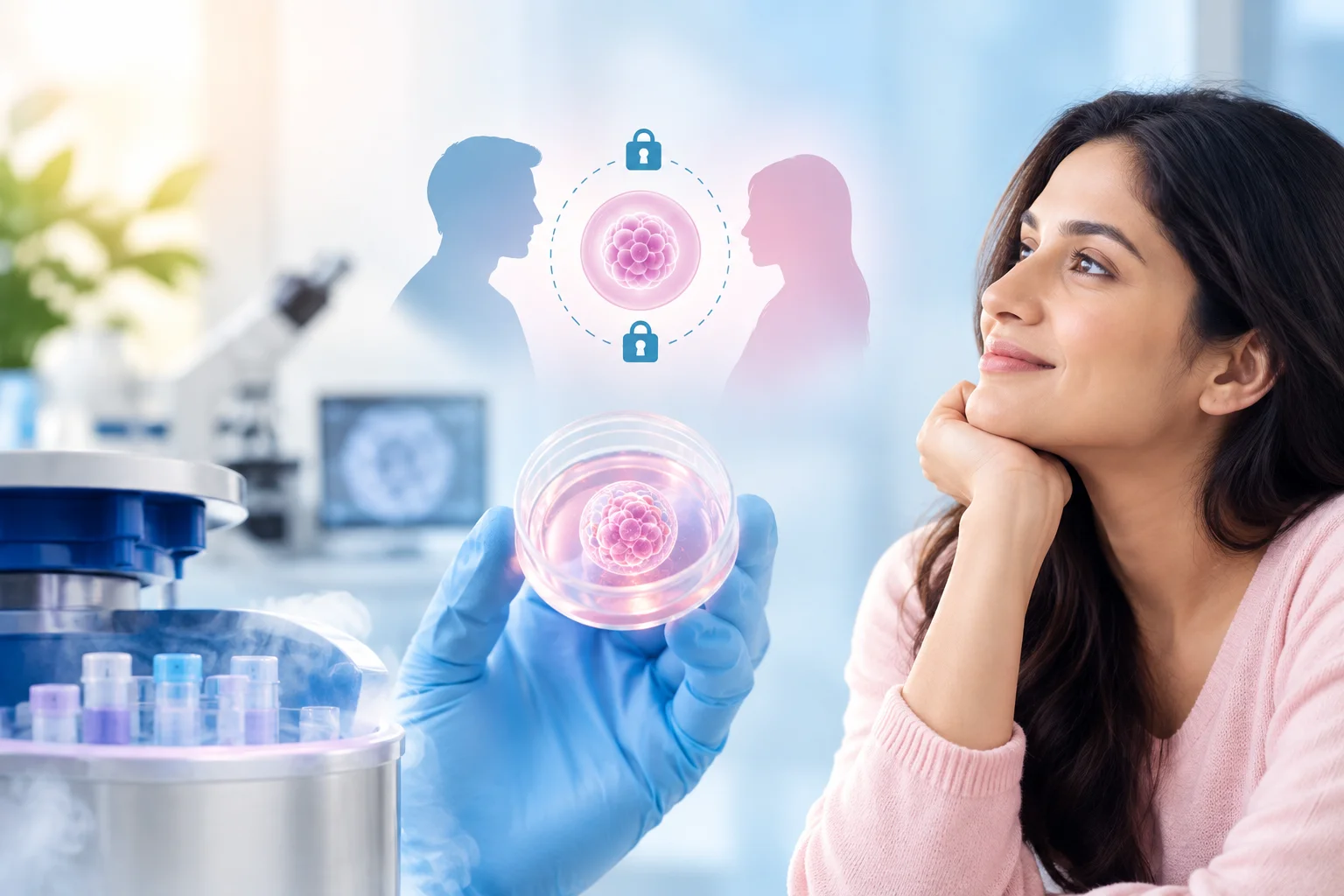
Embryo donation is ALWAYS Anonymous. This means donors and recipients do not know each other's identities. With an anonymous donation, no contact can be made between donor and recipient, either now or in the future.
Donor and recipient identities remain confidential
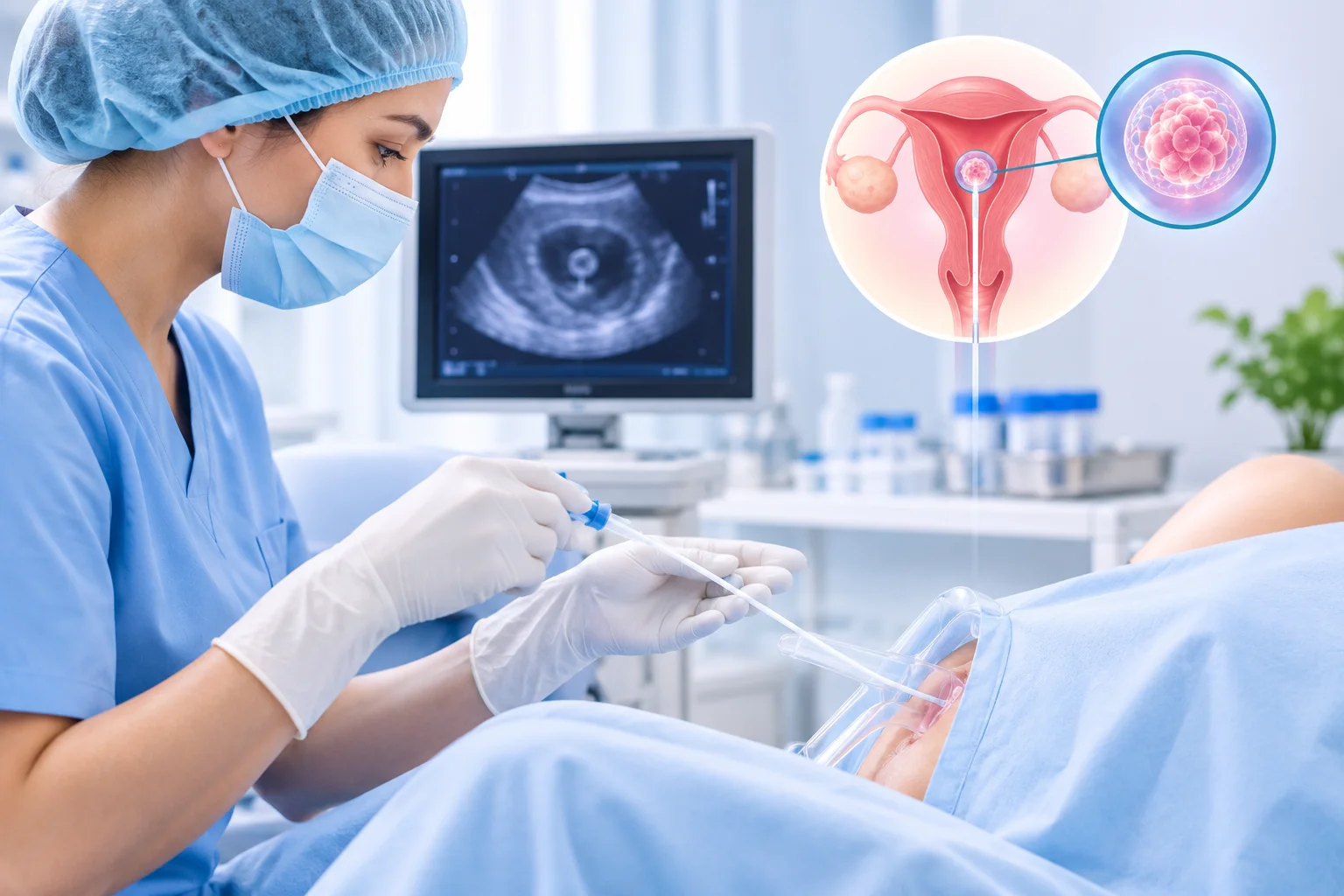
Embryo transfer similar to IVF
An embryo transfer during the Donor Embryo Program is similar to embryo transfer during an IVF cycle. The doctor transfers the embryo into the uterus through the cervix using a thin catheter.
The donor embryo is selected as part of the donor embryo treatment program according to the applicable medical process.
The doctor transfers one or two embryos into the uterus through the cervix using a thin catheter.
To avoid the risk of multiple pregnancy, usually no more than two embryos are transferred. Depending on the recipient's age and circumstances, the doctor may recommend transferring only one embryo.
A pregnancy resulting from embryo donation has the same risks to the baby and the recipient as any other pregnancy, with additional consideration of the recipient's age and medical conditions.

Care throughout your treatment
A pregnancy resulting from embryo donation has the same pregnancy-related risks as any other pregnancy.
The age of the recipient is an important consideration when planning embryo transfer.
Existing medical conditions of the recipient should be evaluated before embryo transfer.
Your fertility specialist will guide you through the treatment and explain the individual medical considerations involved.
According to the provided information, success rates for donor embryos tend to be higher than traditional IVF because the donated eggs are from younger fertile women and the sperm donors are younger.
The provided information states that the female donors are under 35 years of age.
The provided information states that sperm donors are under 45 years of age.
The recipient's age and medical conditions are important considerations during treatment.
Careful planning of embryo transfer is important for the donor embryo treatment cycle.
The cost of IVF with donor embryos depends on the treatment plan and services involved.
Medical consultation and fertility assessment.
Preparation and planning of the embryo transfer cycle.
Donor embryo-related laboratory and treatment procedures.
Embryo transfer procedure.
Required monitoring and follow-up during the treatment cycle.
Important to know
According to the provided information, conception through Donor Embryo costs approximately the same as IVF with Oocyte Donation. The actual treatment cost may vary according to the individual treatment plan and applicable clinic charges.
Quick Reference
Please refer to the following Quick Reference Chart for knowing the cost of IVF with Donor Embryos.
Find answers to common questions about embryo donation, donor anonymity, treatment process, risks, success rates and costs.
Embryo donation is a process in which a couple receives embryos from the ART Bank.
Donor embryo may be recommended when both partners have issues that prevent them from producing eggs and sperm of their own, when there is a risk of passing on a genetic disorder, or in selected situations such as a single person who has gone through menopause.
According to the provided information, embryo donation is always anonymous. Donors and recipients do not know each other's identities.
The provided information states that with anonymous donation, no contact can be made between donor and recipient either now or in the future.
The embryo transfer during a donor embryo program is similar to an IVF embryo transfer. The doctor transfers one or two embryos into the uterus through the cervix using a thin catheter.
Usually no more than two embryos are transferred to reduce the risk of multiple pregnancy. Depending on the recipient's age and circumstances, the doctor may recommend transferring only one embryo.
The provided information states that donor embryos come from younger donors, with the female donor under 35 and the sperm donor under 45, and that younger embryos tend to be more viable.
The provided information states that success rates for donor embryos tend to be higher than traditional IVF because the donated eggs are from fertile women under 35 and sperm is from men aged 45 or under.
A pregnancy resulting from embryo donation has the same risks to the baby and recipient as any other pregnancy, with additional consideration of the recipient's age and medical conditions.
According to the provided information, conception through donor embryo costs approximately the same as IVF with Oocyte Donation. The current cost should be confirmed with the clinic.
Take the first step towards parenthood with compassionate care, expertise, and support tailored to your unique needs.