Pelvic Anatomy
The transvaginal ultrasound picture depicts accurately the pelvic anatomy of the scanned area safely, quickly and reproducibly.

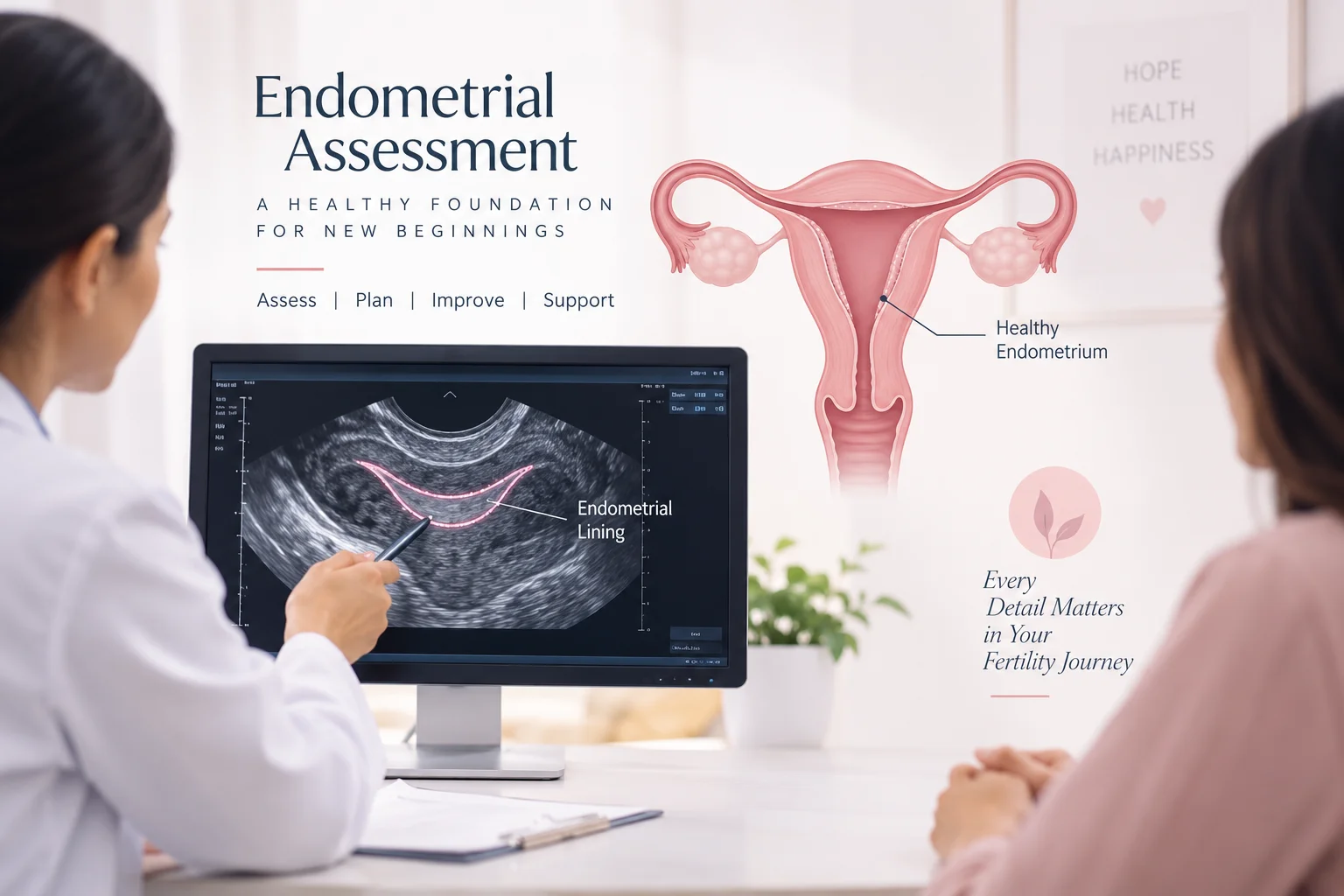
Ultrasonographic assessment is an extremely important part of any fertility assessment because it helps identify problems or irregularities which may affect conception and provides your Specialist with valuable information to facilitate treatment planning. A detailed assessment of the uterus, endometrium and surrounding pelvic anatomy can help evaluate factors that may influence implantation and fertility treatment outcomes. Transvaginal ultrasound provides a safe, quick and reproducible way to examine the pelvic structures, while advanced 3D and 4D ultrasound can provide additional information about the uterine cavity and endometrial characteristics. The findings from the assessment can help the fertility specialist understand the patient's individual reproductive anatomy and plan the most appropriate treatment.
Ultrasonographic assessment is an extremely important part of any fertility assessment because it identifies any problems or irregularities which may affect conception and provides your Specialist with information to facilitate treatment planning.
The transvaginal ultrasound picture depicts accurately the pelvic anatomy of the scanned area safely, quickly and reproducibly.
USG assessment of the endometrium is an important investigative tool in the assessment of receptivity of the endometrium.
Congenital uterine abnormalities may have an important role in subfertility, implantation failure and outcome of pregnancy.
Endometrial volume is a useful criterion in predicting embryo implantation success and pregnancy rate in patients undergoing IVF.
3D/4D scanning technology is the most advanced technique in ultrasound. In pre-conception imaging, 3D ultrasound is particularly useful for identifying abnormalities in the uterus and helps in the evaluation of the uterine cavity.
Detailed ultrasound imaging
Detailed uterine imaging
3D and 4D scanning provides detailed imaging and information that can assist fertility assessment and treatment planning.
3D and 4D scanning provides more detailed imaging of the uterus and surrounding anatomy.
It provides effective identification of issues which might affect fertility or possible causes of recurrent pregnancy loss.
The imaging provides information which can assist with prediction of your response to drugs used to stimulate your ovaries.
The information obtained from 3D/4D scanning assists with planning optimum treatment.
3D and 4D ultrasound can provide a clearer view of the shape and structure of the uterine cavity, helping the Specialist assess the uterus during fertility evaluation.
Detailed ultrasound information can help the fertility specialist assess the uterine and endometrial environment before selecting or planning an appropriate fertility treatment.
3D/4D assessment can be used to evaluate the uterine cavity and identify abnormalities that may affect fertility, implantation or pregnancy outcome.
Advanced ultrasound evaluation of the uterine cavity
3D ultrasound helps evaluate the uterine cavity for endometrial polyps, which are benign growths of the lining of the uterus.
The assessment can help identify uterine fibroids, which are benign tumours of the muscle of the uterus.
The live page also lists endometriosis among the conditions that may be evaluated through pre-conception 3D ultrasound.
Congenital uterine abnormalities may have an important role in subfertility, implantation failure and outcome of pregnancy.
The live page describes 3D/4D ultrasound as an advanced technique for pre-conception imaging and evaluation of the uterine cavity.
Ultrasound assessment provides important information about the endometrium and uterine cavity that can assist with fertility treatment planning.
USG assessment of the endometrium is an important investigative tool in the assessment of endometrial receptivity.
Transvaginal ultrasound can accurately depict the pelvic anatomy of the scanned area safely, quickly and reproducibly.
Endometrial volume is a useful criterion in predicting embryo implantation success and pregnancy rate in patients undergoing IVF.
The information obtained from ultrasound assessment assists the Specialist in planning optimum treatment.
Ultrasound assessment provides information that can help your Specialist with fertility assessment and treatment planning.
Ultrasonographic assessment can identify problems or irregularities which may affect conception.
Transvaginal ultrasound provides accurate pelvic anatomy assessment.
USG assessment of the endometrium is an important investigative tool for assessing endometrial receptivity.
3D/4D scanning can provide information useful for planning optimum treatment.
Important to know
The live Endometrial Assessment page does not mention a specific price for the assessment.
Quick Reference
Please contact the clinic for the current cost of Endometrial Assessment.
Find answers to common questions about ultrasound assessment, endometrial receptivity, 3D/4D technology and uterine cavity evaluation.
Ultrasonographic assessment is an extremely important part of fertility assessment because it identifies problems or irregularities which may affect conception and provides your Specialist with information to facilitate treatment planning.
The transvaginal ultrasound picture accurately depicts the pelvic anatomy of the scanned area and provides a safe, quick and reproducible method of assessment.
USG assessment of the endometrium is an important investigative tool in assessing the receptivity of the endometrium and can provide useful information during fertility evaluation.
Yes. Congenital uterine abnormalities may have an important role in subfertility, implantation failure and the outcome of pregnancy.
Endometrial volume is described as a useful criterion in predicting embryo implantation success and pregnancy rate in patients undergoing IVF.
3D/4D scanning technology is an advanced ultrasound technique. In pre-conception imaging, 3D ultrasound is particularly useful for identifying abnormalities in the uterus and evaluating the uterine cavity.
3D ultrasound can help evaluate the uterine cavity for conditions such as endometrial polyps, uterine fibroids and other uterine conditions.
3D and 4D scanning provides detailed imaging and information that can assist fertility assessment, identification of issues that might affect fertility, assessment of response to ovarian stimulation and treatment planning.
The assessment is performed using a transvaginal sonogram to obtain detailed images of the uterus and endometrial cavity.
Endometrial receptivity refers to the suitability of the uterine lining for embryo implantation. Ultrasound assessment of the endometrium is an important investigative tool in assessing endometrial receptivity.
Ultrasound can help identify problems or irregularities involving the uterus. The page specifically describes 3D ultrasound as particularly useful for identifying uterine abnormalities and evaluating the uterine cavity.
Yes. The page states that 3D ultrasound helps in evaluating the uterine cavity for the presence of endometrial polyps.
Yes. 3D ultrasound can help identify uterine fibroids, which are benign tumours of the muscle of the uterus.
Yes. Ultrasonographic assessment provides the Specialist with information that can help identify problems or irregularities and facilitate fertility treatment planning.
The page describes transvaginal ultrasound as a safe, quick and reproducible method for accurately depicting pelvic anatomy.
Evaluation of the uterine cavity can help identify abnormalities that may affect fertility, implantation or pregnancy outcome and can provide information useful for treatment planning.
The page states that 3D/4D scanning can provide effective identification of issues which might affect fertility or possible causes of recurrent pregnancy loss.
The page states that the imaging can assist with prediction of a patient's response to drugs used to stimulate the ovaries.
The live Endometrial Assessment page does not provide a specific price. Patients are advised to contact the clinic for the current cost of the assessment.
The page describes a 3D/4D assessment of the endometrial cavity using a transvaginal sonogram, which provides detailed imaging of the uterus and uterine cavity.
Take the first step towards parenthood with compassionate care, expertise, and support tailored to your unique needs.