
Micro TESE – Testicular Sperm Extraction
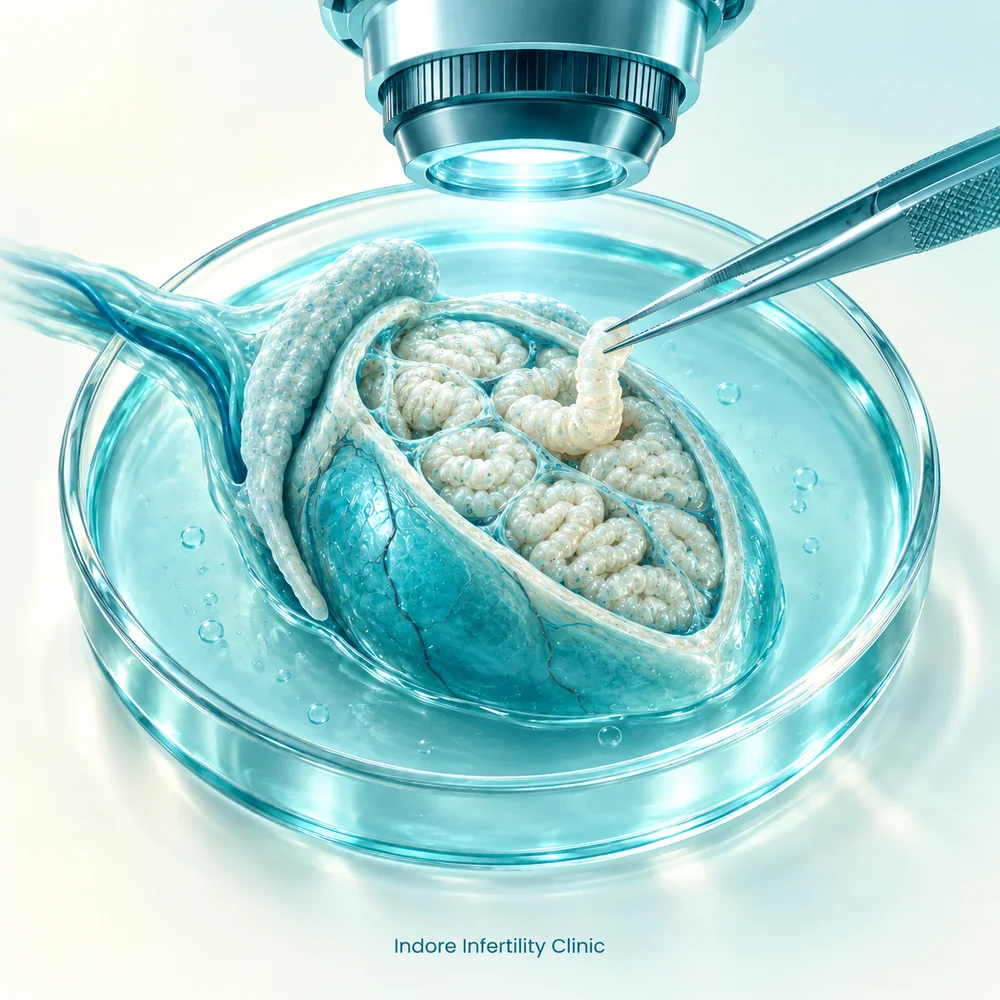
Micro Surgical Testicular Sperm Extraction, commonly called Micro-TESE, is a surgical sperm retrieval procedure performed with the help of a powerful microscope. During the procedure, testicular tissue is examined under magnification so that tubules more likely to contain sperm can be selectively identified and sampled. This approach is particularly useful in selected cases of non-obstructive azoospermia, where sperm production may be severely reduced and sperm may be present only in small pockets within the testicular tissue. The retrieved tissue is carefully examined in the laboratory to identify viable sperm that may be used for IVF with ICSI.
What is Micro TESE?
Micro Surgical Testicular Sperm Extraction or Micro TESE is a procedure wherein surgical sperm retrieval is done with the help of microscope.
How is it done?
MICRO TESE is usually performed under either General Anaesthesia or local Anaesthetic block. In this procedure, an incision is made in the skin and the testicular tissue is viewed under magnification. The tubules containing sperms are usually seen as being swollen up or dilated. These tubules are selectively sampled for presence of sperms and these sperms are used for IVF ICSI.
What are the advantages of performing Micro-TESE over TESA or PESA?
The advantage of MICRO TESE over other methods of surgical sperm retrieval is that if sperms are present in small pockets, and not throughout the entire testes, there are better chances that these sperms will be retrieved by MICRO TESE as the procedure is done under direct microscopic vison. In TESA / PESA etc, sperms are sampled blindly and more likely to be missed if only present scantily in some areas. Therefore in Non Obstructive Azoospermia, MICRO TESE offers better chances of success than PESA or TESA.
What are the disadvantages?
The only disadvantage of MICRO TESE is that it is slightly more invasive and a stitch needs to be applied. This is only temporary and the procedure does not leave behind any permanent scarring or pain.
What is the cost of micro-TESE or Surgical Sperm Retreival?
Please refer the following Quick Reference Chart for knowing the cost Micro TESE procedure
Cost of TreatmentFrequently Asked Questions About Micro-TESE
Find answers to common questions about Micro-TESE, surgical sperm retrieval, non-obstructive azoospermia and IVF-ICSI.
Micro-TESE stands for Micro Surgical Testicular Sperm Extraction. It is a surgical sperm retrieval procedure performed using a microscope to identify and selectively sample testicular tubules that may contain sperm.
Micro-TESE is performed to retrieve sperm directly from the testicular tissue when sperm are absent from the ejaculate or are present in very small quantities.
Micro-TESE is particularly useful in selected men with non-obstructive azoospermia, where sperm production is severely reduced and sperm may be present only in small areas of the testis.
Non-obstructive azoospermia refers to absence of sperm in the ejaculate because sperm production in the testes is impaired or severely reduced. In some cases, small areas of sperm production may still be present within the testicular tissue.
TESA uses a needle to aspirate testicular tissue, whereas Micro-TESE involves opening the testicular tissue and examining it under a powerful microscope so that potentially sperm-containing tubules can be selectively sampled.
PESA retrieves sperm from the epididymis using a needle. Micro-TESE retrieves sperm directly from the testicular tissue using microscopic surgical examination.
The clinic states that if sperm are present only in small pockets within the testes, Micro-TESE may provide a better chance of locating them because the surgeon can directly examine the tissue under a microscope rather than sampling blindly.
The procedure is performed under either general anaesthesia or a local anaesthetic block. An incision is made in the skin, testicular tissue is exposed and examined under magnification, and selected tubules that may contain sperm are sampled.
Yes. The clinic states that Micro-TESE is usually performed under either general anaesthesia or a local anaesthetic block.
The testicular tissue is examined under microscopic magnification. Tubules that appear swollen or dilated are selectively sampled and the tissue is then examined in the laboratory for sperm.
Yes. The clinic states that sperm retrieved through Micro-TESE can be used for IVF with ICSI.
When viable sperm are successfully retrieved, they can be used with ICSI to fertilize the female partner's eggs, providing an opportunity for biological fatherhood in selected cases.
No. Although microscopic examination can improve the chance of locating sperm when they are present in small pockets, sperm retrieval cannot be guaranteed, particularly in severe non-obstructive azoospermia.
Yes. The clinic describes Micro-TESE as slightly more invasive because an incision is required and a temporary stitch may be applied.
The clinic states that the temporary stitch does not leave permanent scarring or pain.
The retrieved tissue is processed in the laboratory. If viable sperm are identified, they can be used for IVF with ICSI.
If sperm are not identified, the fertility specialist will discuss the available options based on the underlying cause of azoospermia and the couple's fertility plan. The clinic's azoospermia information discusses alternatives such as donor sperm when sperm cannot be obtained.
Micro-TESE is particularly highlighted by the clinic for non-obstructive azoospermia. In obstructive azoospermia, sperm production may be preserved and less invasive retrieval techniques such as TESA or PESA may be considered depending on the individual case.
The Micro-TESE page does not state a fixed price. The clinic directs patients to its Quick Reference Chart for the current cost of Micro-TESE or surgical sperm retrieval.
No. Both procedures retrieve sperm from testicular tissue, but Micro-TESE uses powerful microscopic magnification to identify and selectively sample tubules that may contain sperm.
Ready to begin your journey?
Take the first step towards parenthood with compassionate care, expertise, and support tailored to your unique needs.