Early Ultrasound Evaluation
Confirming pregnancy location, viability, and early heart activity around 6 to 7 weeks.


Pregnancy care after IVF in Indore, from early pregnancy to delivery planning, including fetal growth, wellbeing and heart rate monitoring. At Indore Infertility Clinic, your IVF records, medicines and scans guide a care plan tailored to you and your baby. We provide meticulous, compassionate support right from the crucial early weeks—managing customized hormonal supplementation and early ultrasound tracking—through to advanced structural screenings, regular fetal wellbeing assessments, and precise Doppler monitoring. Our experienced specialists coordinate every milestone closely with you, ensuring seamless management of your unique journey, proactive risk mitigation, and a carefully structured delivery plan for a safe and healthy arrival.
Care is individualised to pregnancy findings, gestation, and your treating clinician's plan.
Confirming pregnancy location, viability, and early heart activity around 6 to 7 weeks.
Reviewing dating, first trimester ultrasound, and screening choices, including genetic counselling when needed around 11 to 14 weeks.
Comprehensive assessment of fetal anatomy, placenta, and cord around 18 to 22 weeks.
Assessing growth, wellbeing, Doppler parameters, and heart rate monitoring based on risk factors.
Evaluating placental blood flow and cord insertion when indicated by clinical findings.
Learning your baby's usual movement pattern, where reduced or changed movements require prompt maternity assessment.
Your monitoring schedule is tailored to growth, movements, and maternal health.

Confirm pregnancy location and early development; assess heart activity when appropriate and repeat uncertain scans as advised.

Review dating, first trimester ultrasound, and screening choices, including genetic counselling when needed.
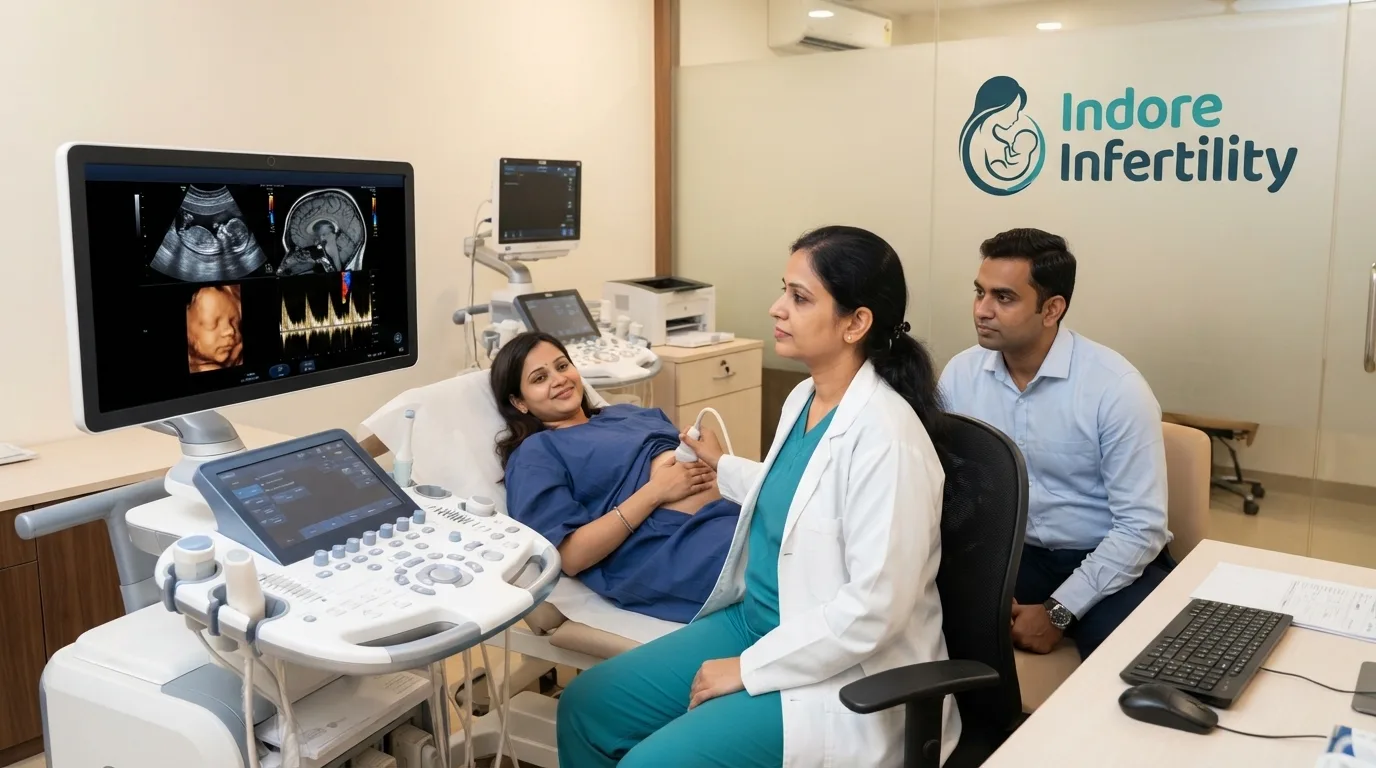
Detailed anatomy, placental, and cord assessment, alongside discussing fetal echocardiography and specialist reviews.

Assess growth and wellbeing with further scans, Doppler, and heart rate monitoring depending on risk factors.
An NST is a non-invasive test that records your baby's heart rate and its response to movements, using cardiotocography (CTG) sensors on your abdomen.
Contractions are not deliberately induced; the recording usually takes 20 to 40 minutes and may continue longer.
Arranged for reduced fetal movements, growth concerns, maternal conditions, or planned later pregnancy surveillance.
Results are evaluated alongside growth, fluid, Doppler, and movement history.
Birth timing, mode of delivery, and the delivery hospital are planned around maternal health and baby's wellbeing.
Seek immediate care for reduced movements, heavy bleeding, severe pain, fainting, fluid leakage, or painful contractions.
Knowing warning signs and taking prompt action protects both mother and baby.
Do not wait until tomorrow or rely on a home Doppler for reduced movements.
Report any decrease or sudden alteration in fetal movement immediately to your maternity team.
Any unexpected bleeding during pregnancy requires urgent medical evaluation.
Intense or persistent pain should be checked promptly by a clinician.
Episodes of fainting or severe lightheadedness necessitate immediate hospital care.
Signs of pre-term labor contractions or premature rupture of membranes require urgent assessment.
Report reduced or changed movements immediately, even after a normal scan.
Birth timing, mode of delivery, and hospital coordination are tailored around maternal health and fetal wellbeing.
Scheduled based on gestation, growth assessments, and maternal clinical indicators.
IVF alone does not determine the birth mode; pregnancy findings and obstetric indications guide choices.
Arranging neonatal and maternity care facilities aligned with your delivery plan.
Ensuring smooth handover from antenatal surveillance to postpartum and newborn care.
Antenatal care packages cover routine consultations, scheduled growth scans, and monitoring services tailored after IVF.
Covers scheduled clinician consultations through trimesters.
Includes growth ultrasound tracking and specialized Doppler assessments when indicated.
Incorporates fetal heart rate monitoring and NST sessions as prescribed.
Provides guidance on delivery planning and hospital coordination.
Personalised Care
Our clinic ensures transparent discussion of all antenatal monitoring costs and care schedules.
Quick Reference
Consult our reception desk for detailed antenatal care package structures.
Find answers to common questions about early tests, medication stop dates, monitoring, and delivery.
Your doctor reviews the result and arranges follow-up blood tests or an early scan as needed. A positive result alone does not confirm pregnancy location or viability.
Follow the prescribed stop date. Hormonal support varies by transfer protocol; do not stop or change medicines without your treating doctor's advice.
Yes, prenatal screening and diagnostic testing options are still offered. Preimplantation genetic testing (PGT) does not replace these options.
A third trimester growth assessment may be advised. Repeat scans depend on growth, pregnancy risks and clinical findings, rather than being needed at every visit.
No. Some babies are naturally small. Growth trends, fluid and Doppler findings help identify babies who need closer monitoring.
An NST is non-invasive and should not hurt. Sensors are secured on your abdomen; recording usually takes 20 to 40 minutes and sometimes longer.
Contact your maternity team immediately if movements reduce or change. Do not wait until the next day or use a home Doppler for reassurance.
No. IVF alone does not determine the mode of birth. Pregnancy findings, obstetric indications and your preferences guide the delivery plan.
Take the first step towards parenthood with compassionate care, expertise, and support tailored to your unique needs.