Very Low Sperm Numbers
Specialised freezing may be considered when only a few usable sperm are found.

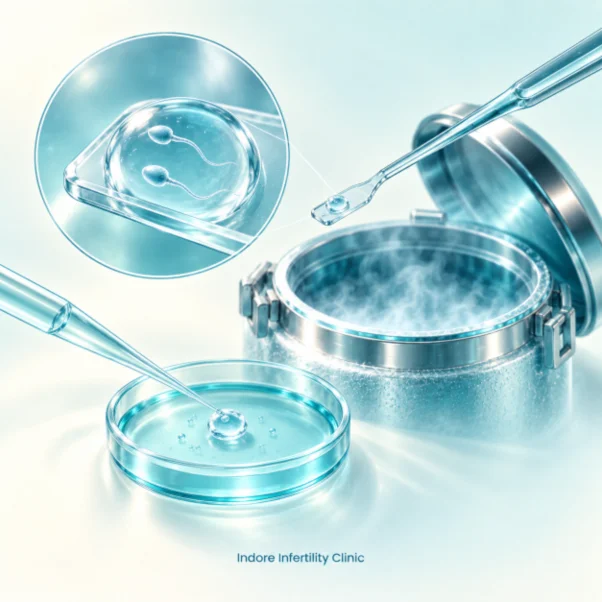
Rare Sperm Freezing is a specialised fertility preservation technique used to store very small numbers of sperm for future treatment. It is also known as single-sperm or small-number sperm cryopreservation and may be recommended when sperm are extremely difficult to find in a semen sample or obtained through a fertility procedure. The selected sperm are carefully collected, assessed and placed on specialised carriers before being frozen and stored under controlled laboratory conditions. This approach helps preserve viable sperm that may otherwise be lost or unavailable later. When treatment is planned, the stored sperm can typically be used with IVF and ICSI, where an individual sperm is injected directly into an egg to support fertilisation.
Specialised freezing may be considered when only a few usable sperm are found.
Sperm may be detected only after a detailed search of the processed semen sample.
Small numbers recovered from testicular or epididymal samples may be suitable for preservation.
Banking sperm found before IVF may provide a backup if none are available on the treatment day.
The plan depends on the number and condition of sperm found.
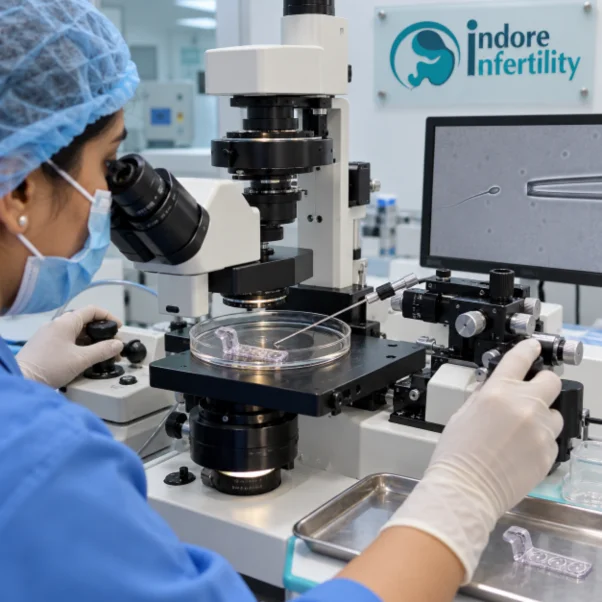
The embryologist searches the sample and selects suitable sperm under the microscope.
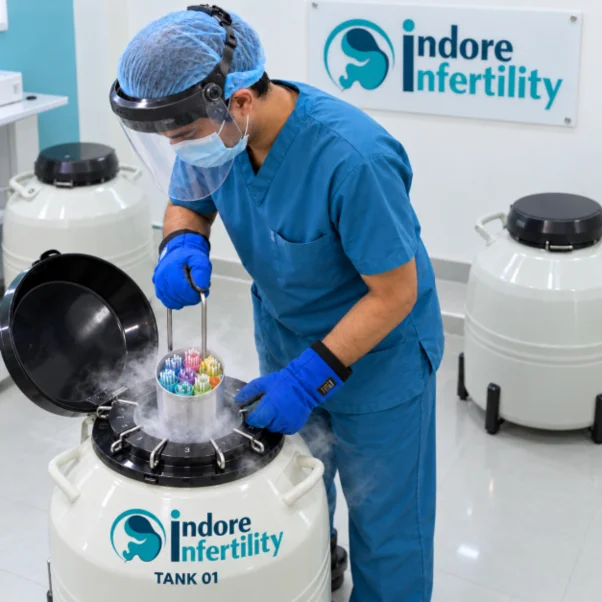
Carriers are labelled and their storage locations recorded for later recovery.
Bring semen reports and any sperm retrieval records. Share medicines and recent illness.
Use the approved container. Follow the laboratory advice on abstinence and sample delivery.
Agree what happens if no usable sperm are found. Review consent, costs and future use.
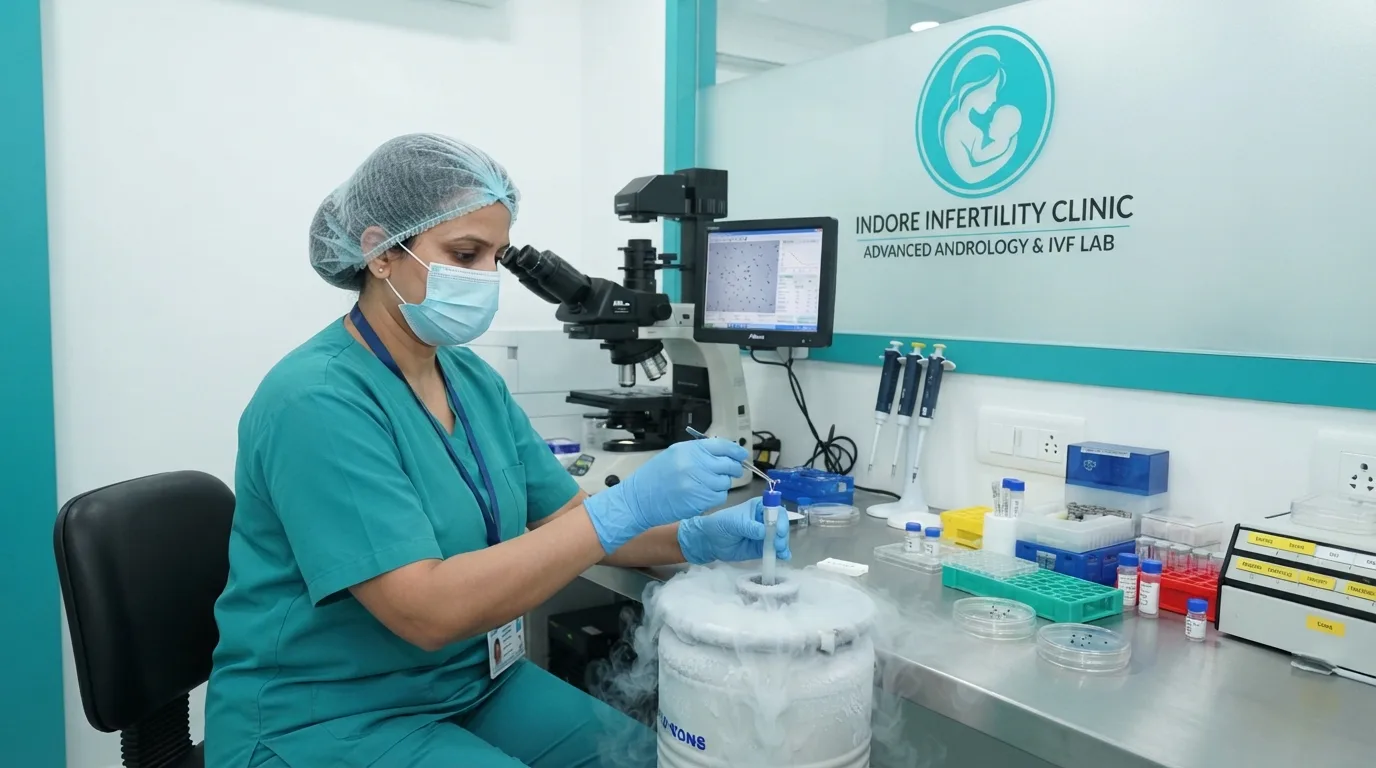
Care throughout your treatment
Some stored sperm may not be recovered or may not survive freezing and warming.
Very few stored sperm may be insufficient for all available eggs or another treatment cycle.
Freezing is a laboratory procedure. Surgical collection has its own risks if required.
Recovery, fertilisation, embryo development and live birth are separate outcomes.
Ask for a written estimate based on your sample and storage plan. Confirm the charges for:
Consultation, screening and laboratory search.
Carriers, sperm handling and cryopreservation.
Storage period, renewal charges and consent updates.
Warming, ICSI and IVF. Surgical retrieval is separate if needed.
Important to know
Discuss recovery, survival and treatment expectations separately.
Quick Reference
Discuss recovery, survival and treatment expectations separately.
Routine freezing stores larger sperm populations. Rare sperm freezing uses methods suited to very small numbers.
Single sperm preservation is possible with specialised methods. Suitability depends on the sperm and laboratory assessment.
Sometimes, a detailed search finds rare sperm. If none are found, a specialist reviews further evaluation or retrieval.
No. Recovery and survival vary with the sample, freezing method and carrier. No method guarantees full recovery.
Very small numbers are generally reserved for ICSI. IUI usually requires many more motile sperm.
No. It preserves sperm already available. It does not improve their DNA or chromosomes.
Possibly. Additional samples may help build a reserve if more usable sperm can be found.
Discuss the permitted storage period, consent requirements and renewal fees with the clinic before freezing.
Take the first step towards parenthood with compassionate care, expertise, and support tailored to your unique needs.