
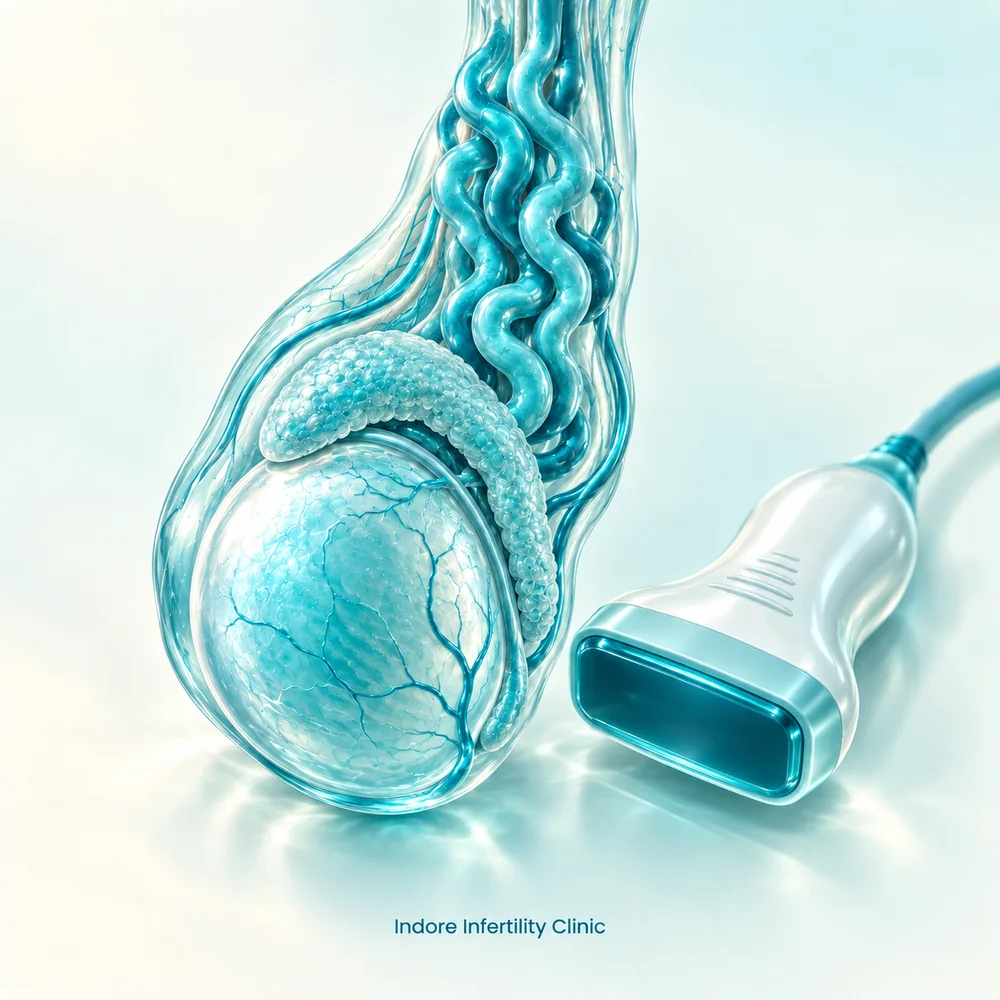
What is Varicocele?
A varicocele is an enlargement of the veins within the scrotum. It is commonly found on the left side and may be associated with infertility, reduced sperm quality, testicular discomfort or changes in testicular growth. A varicocele may develop gradually and may not always cause noticeable symptoms. Some men may discover it during a fertility evaluation, while others may notice heaviness, discomfort or changes in the scrotum. The clinical significance of a varicocele can vary from one person to another, which is why a proper assessment is important. Evaluation can help determine the size and clinical grade of the varicocele, assess testicular health and understand whether it may be relevant to fertility concerns. When required, additional investigations can provide more information about sperm quality, blood flow and other reproductive factors.
Varicocoele is an abnormal enlargement of veins leading away from the testicles caused by the backflow of blood. Varicocoele’s are usually harmless, sometimes with few or no symptoms, but in moderate to severe cases they have been associated with male infertility. It is estimated that up to 20% of men will have a varicocoele but in men with fertility problems, this increases to 40%.
Link Between Varicocele and Infertility
One of the primary concerns associated with varicocele is its impact on male fertility. Research suggests that varicoceles are a leading cause of male infertility, affecting approximately 15% of the male population and up to 40% of men evaluated for infertility.
The precise mechanisms through which varicocele impairs fertility are not fully understood. However, several theories have been proposed:
Elevated Scrotal Temperature: Varicocele can lead to an increase in scrotal temperature due to impaired blood flow and reduced cooling mechanisms. Elevated scrotal temperature can negatively impact sperm production and quality, as sperm are highly sensitive to temperature fluctuations.
Hormonal Imbalance: Varicocele may disrupt hormonal regulation within the testes, leading to alterations in testosterone and other hormone levels essential for sperm production.
Oxidative Stress: The pooling of blood within the varicocele-affected veins can result in increased oxidative stress within the testicular environment. Oxidative stress can damage sperm DNA, impair sperm motility, and reduce sperm viability.
Diagnosis and Treatment
Diagnosing varicocele typically involves a physical examination, often accompanied by imaging tests such as scrotal ultrasound to assess the extent of venous enlargement. Treatment options for varicocele include:
Observation: In cases where varicocele is asymptomatic and does not significantly impact fertility, a “watchful waiting” approach may be recommended.
Surgical Repair: Varicocelectomy, a surgical procedure to ligate or remove the enlarged veins, is a common treatment for symptomatic varicoceles or those causing infertility issues.
Embolization: In some cases, a minimally invasive procedure known as varicocele embolization may be performed to block off the abnormal veins using a catheter and embolic agents.
Conclusion
Varicocele is a prevalent condition that can have substantial implications for male fertility. Understanding its effects and seeking appropriate diagnosis and treatment are crucial steps for individuals experiencing infertility linked to varicocele. With advancements in medical technology and treatment modalities, individuals affected by varicocele have options available to address its impact on fertility and improve their chances of conception.
Due to stagnation of blood flow, there is a reduction in supply of oxygenated blood and nutrient material to the sperm production sites. This reduces the quality and the quantity of the sperms, leading to reduction in their fertility capacity. It is well known that the detrimental effect of varicocele on sperm production is progressive and increases with time.
Why is assessment of Varicocele Important?
Varicocele, whose association with male infertility has been clearly documented, is a common finding in adult men, being diagnosed in 20-40% of infertile patients. A correct and early diagnosis of this condition is of great importance because, in most cases, a timely correction leads to an improvement in semen quality.
Why use Colour Doppler Technology?
- Reliable
- Non-invasive
- Detects even the earliest varieties, thereby allowing early intervention and optimum outcome.
It is because of these reasons that Color Doppler is now considered to be the “Gold Standard” for detection of Varicocele.
Commonly Asked Varicocele Questions
Find answers to common questions about varicocele, assessment, fertility and diagnostic tests.
A varicocele is an enlargement of the veins within the scrotum. It is commonly found on the left side and may be associated with male infertility or other testicular concerns.
Yes. Varicocele can be associated with impaired sperm production and abnormal semen parameters, which is why it may be identified during a male infertility evaluation.
Diagnosis commonly begins with medical history and physical examination. The scrotum may be examined while standing and during a Valsalva manoeuvre. Colour Doppler ultrasound may be used when the diagnosis is uncertain.
Colour Doppler ultrasound can evaluate the spermatic veins and blood flow and can help confirm a varicocele when physical examination findings are uncertain.
No. Physical examination can identify many clinically significant varicoceles. Doppler ultrasound is particularly useful when examination is inconclusive or when additional assessment is required.
Semen analysis is commonly used when fertility is a concern to evaluate sperm concentration, motility and morphology.
No. Not every varicocele needs treatment. The decision depends on symptoms, fertility findings, testicular changes and the overall clinical assessment.
Some men with varicocele experience a dull or aching scrotal discomfort, particularly after prolonged standing or physical activity.
Symptoms, clinical grade, semen parameters, testicular size or growth and the patient's fertility goals are considered before deciding on management.
Ready to begin your journey?
Take the first step towards parenthood with compassionate care, expertise, and support tailored to your unique needs.