
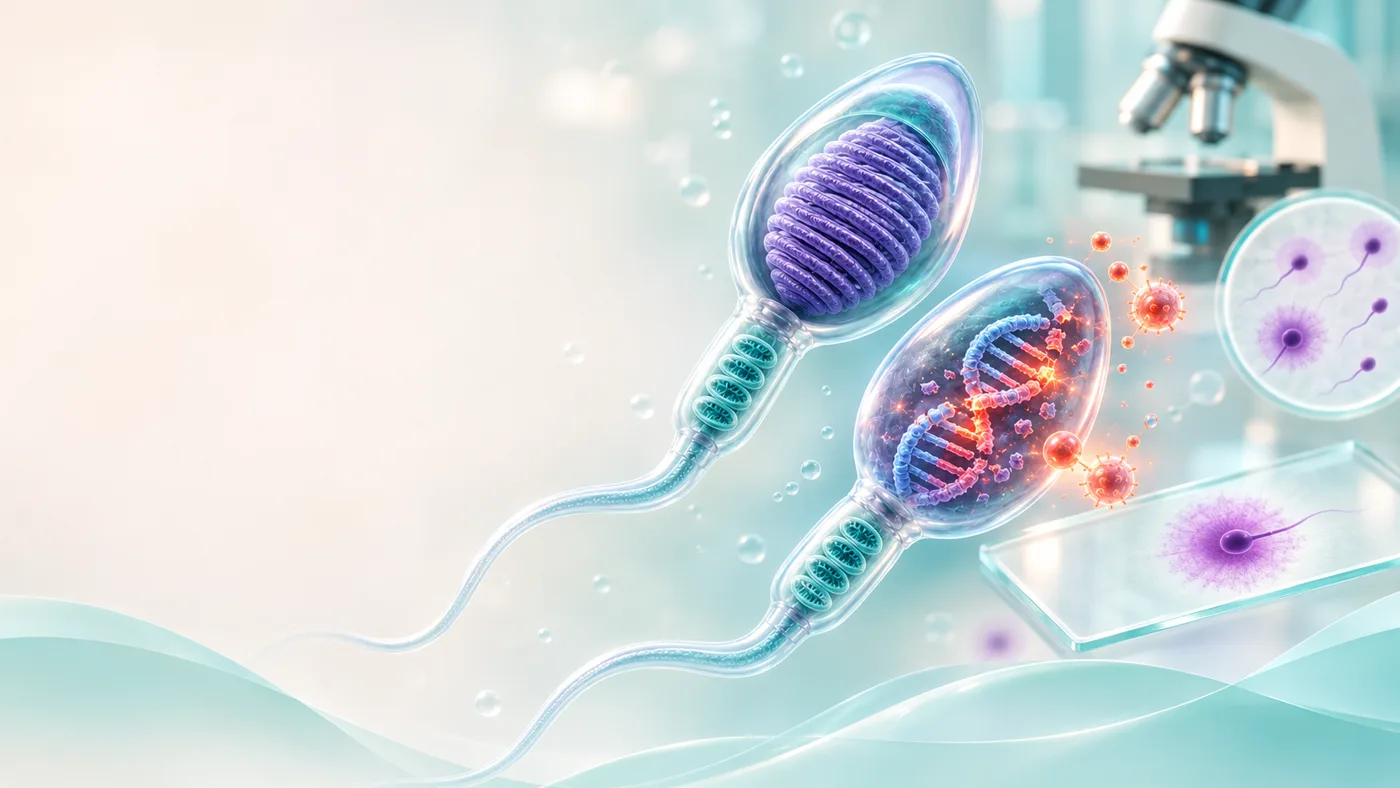
What is DFI?
DFI full form: DFI stands for DNA Fragmentation Index.
What it means: It tells us what proportion of sperm in a semen sample carry damaged or broken DNA. It is therefore a test of sperm DNA quality, not just sperm count or movement.
Why it is useful: Routine semen analysis mainly looks at count, motility and morphology. The DFI test adds another layer of information. A semen report may look reasonable on the surface, yet the sperm DNA may still be under stress or damaged.
Why it matters clinically: A higher DFI may be associated with reduced fertilisation potential, poorer embryo development, lower implantation and a higher chance of miscarriage. It does not predict an outcome on its own, but it can help explain difficult fertility situations and support better counselling.
What is DNA fragmentation?
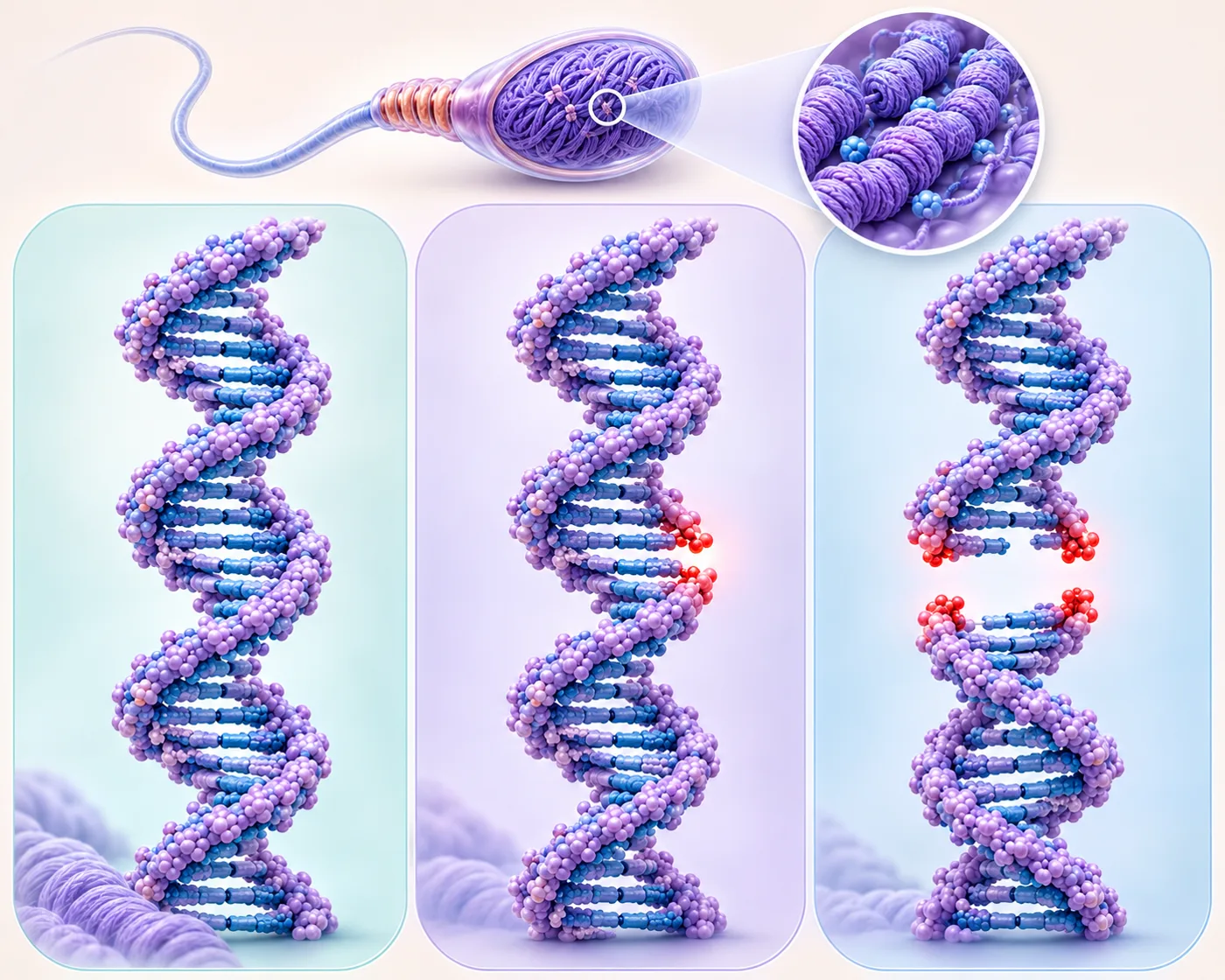
Simple scientific explanation: Each sperm carries the father's genetic material in the form of tightly packed DNA. DNA consists of two linked strands arranged as a double helix. When one strand or both strands develop breaks, the DNA is said to be fragmented.
Why that matters: The sperm may still appear normal under a routine microscope and may even reach the egg, but its genetic package may be less stable than it should be. If the damage is substantial, it may affect fertilisation, embryo development or the ability to sustain a healthy pregnancy.
Single-strand and double-strand breaks
Single-strand break (SSB): Only one of the two DNA backbones is broken.
Double-strand break (DSB): Both DNA backbones are broken at or near the same point. These are generally considered more difficult for the egg to repair.
Important practical point: SCD / halo testing and most routine DFI tests give an overall measure of sperm DNA damage. They usually do not reliably separate single-strand breaks from double-strand breaks. DSB-focused assays exist mainly in research or specialised settings, but they are still not robust or standardised enough for routine day-to-day clinical use in most fertility labs.
How is the DFI test done?
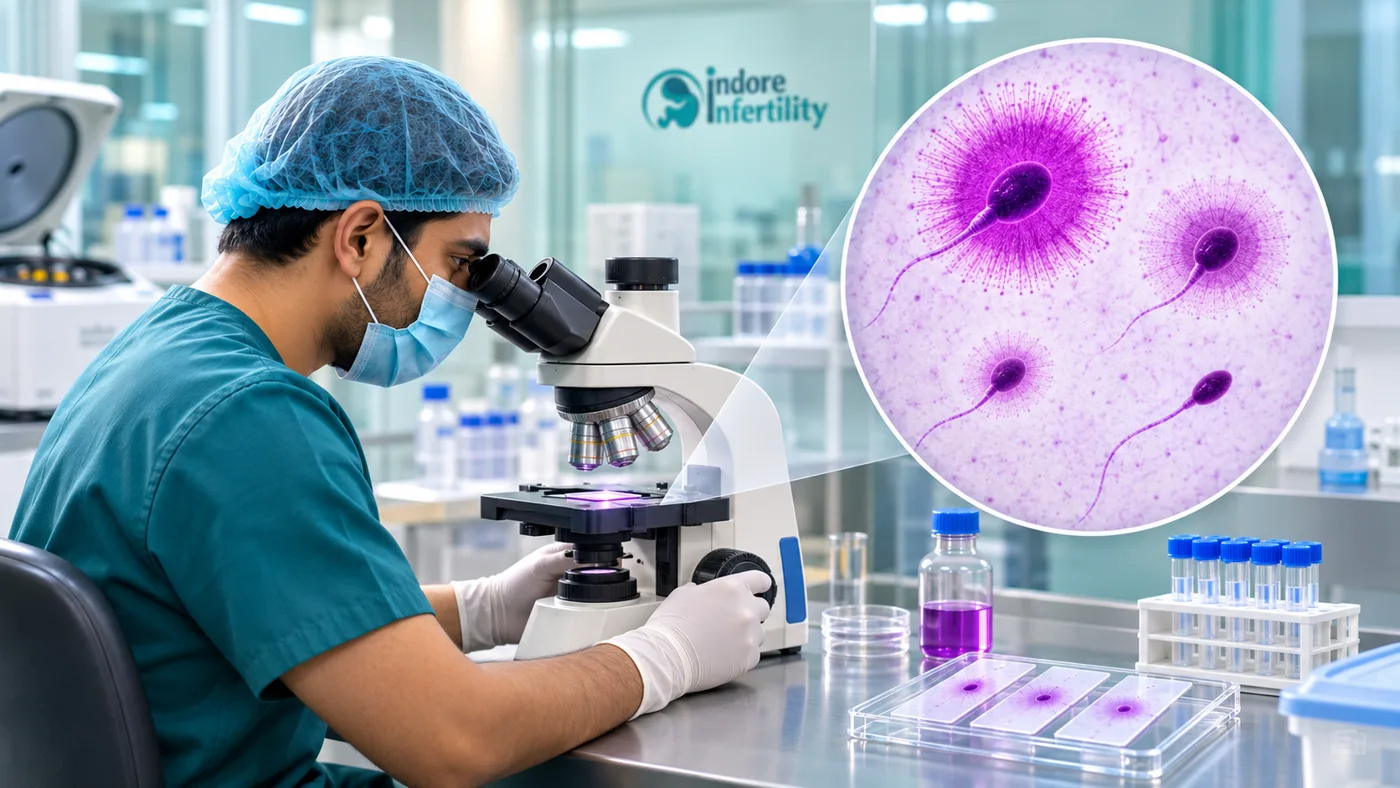
Method used at our clinic: At Indore Infertility Clinic, DFI is assessed using the Sperm Chromatin Dispersion (SCD) or halo test.
How it works: After the sample is processed according to protocol, sperm are examined under the microscope. Sperm with better-preserved DNA form a larger halo, while sperm with more DNA damage tend to show a small halo or no halo. A trained technician evaluates many sperm and calculates the DNA fragmentation index.
Why interpretation matters: The quality of the result depends not only on the patient's sperm, but also on proper processing, scoring and quality control in the andrology laboratory.
DFI report: normal range and cost
How to read the report: Different assays use different thresholds, so the report should always be interpreted according to the test method used. For an SCD / halo-style report, the following counselling ranges are commonly used:
| DFI range | Practical interpretation |
|---|---|
| 15% or lower | Usually considered low / favourable DNA damage range |
| 16–30% | Borderline or moderately increased DNA damage |
| Above 30% | High DFI; requires clinical interpretation in context |
Clinic cost: The DFI test cost at Indore Infertility Clinic is ₹5,500.
Important caution: A DFI report should never be read in isolation. It should be interpreted together with semen analysis, fertility history, female factors and the overall treatment context.
When is a DFI test ordered? Is it a routine test?
Is it routine? No. DFI is not a routine test for every patient. It is usually advised in selected situations when there is a specific reason to suspect sperm DNA damage or when a standard work-up does not fully explain the problem.
Common situations where it may be advised:
- Difficulty conceiving even though standard female and male evaluation does not reveal a clear cause (unexplained infertility).
- Repeated pregnancy losses, especially early miscarriages, where sperm DNA quality may be relevant (recurrent pregnancy loss).
- Poor fertilisation, repeated poor embryo development, repeated implantation failure, or recurrent IVF / ICSI failure.
- Presence of male risk factors such as varicocele, smoking, infection or inflammation, advanced age, obesity, heat exposure or high oxidative stress.

Oxidative stress: the key link
What are ROS? Reactive oxygen species (ROS) are highly reactive molecules generated during normal metabolism.
Where sperm encounter them: Sperm naturally encounter ROS during sperm formation, during epididymal maturation and storage, from their own mitochondrial activity, in semen after ejaculation, and from surrounding inflammatory cells such as leukocytes. ROS levels may rise further with smoking, varicocele, infection, fever, environmental toxins, obesity, heat stress or prolonged sample delay.
Why a small amount is necessary: A low, controlled amount of ROS is actually useful. It helps with normal sperm signalling, including capacitation, hyperactivation, acrosome reaction and sperm–egg interaction. In other words, a small amount helps sperm function normally.
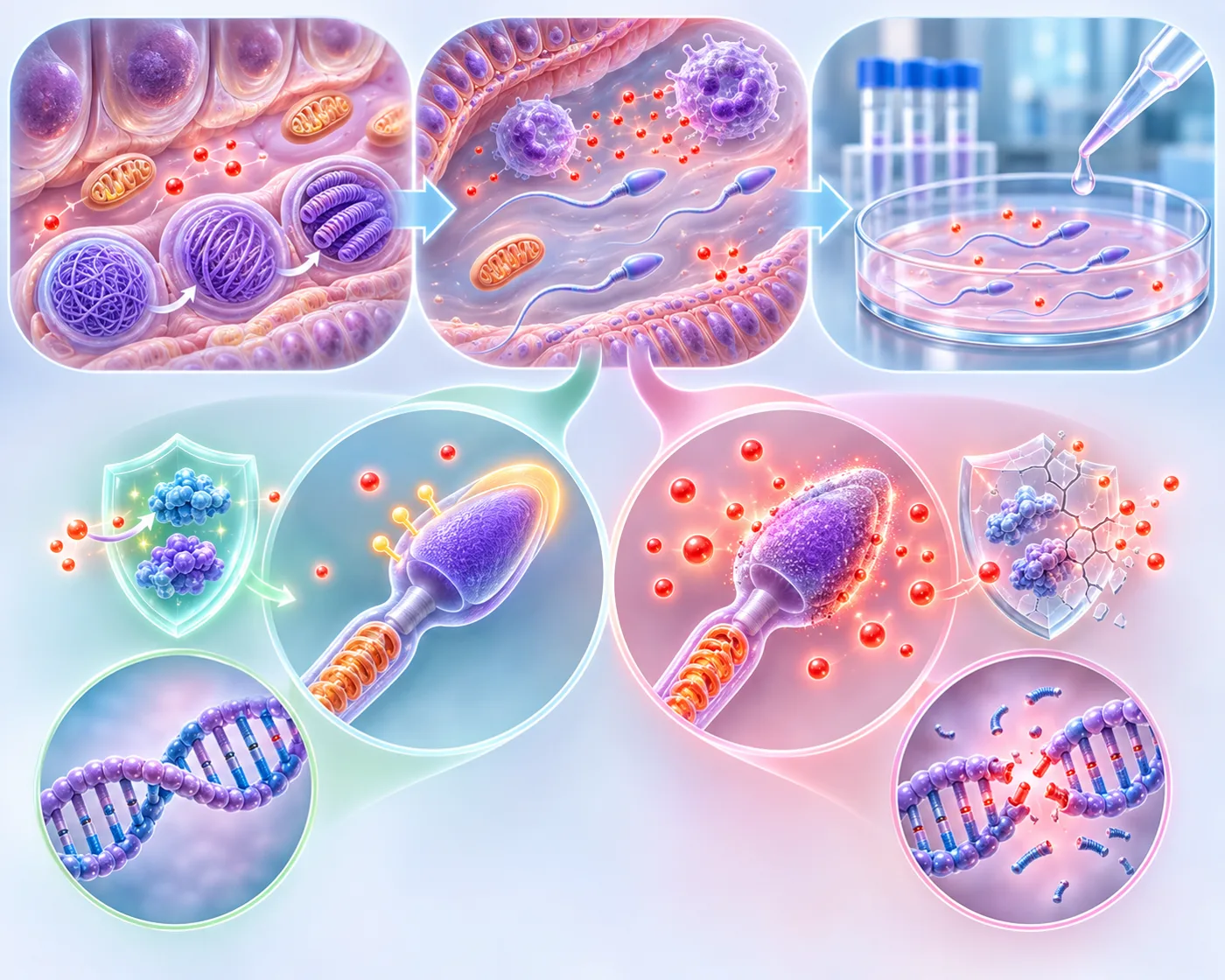
When the balance becomes harmful: When ROS become excessive and overwhelm antioxidant protection, oxidative stress develops. These excess molecules can attack sperm membranes, proteins and DNA, eventually leading to chromatin instability and DNA strand breaks.
How smoking can increase DFI
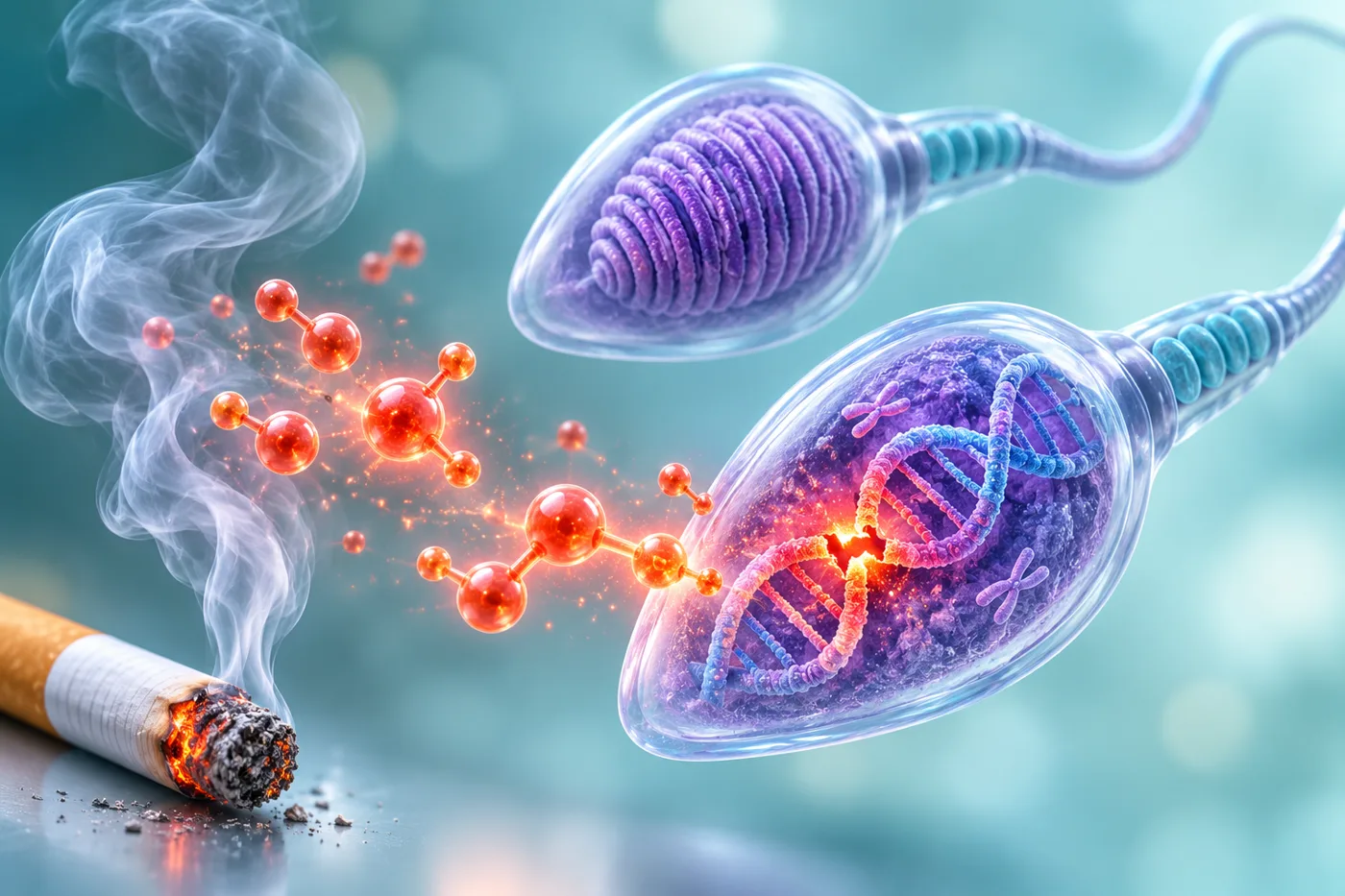
In simple terms: Smoking exposes the body to oxidant chemicals and free-radical–forming substances. This increases oxidative stress and can damage the membrane and DNA inside the sperm head. That is one of the main ways smoking can raise DFI.
What can influence a DFI result?
Why proper andrology-lab handling matters: The DFI result depends not only on the patient, but also on sample collection, transport, storage, processing and interpretation.
Examples of important pre-analytical and laboratory factors:
- Long abstinence may increase the measured DFI.
- Unnecessary delay before processing may expose sperm to additional metabolic and oxidative stress.
- Improper transport or storage temperature may alter the measured fragmentation.
- SCD halo scoring requires experience so that large, medium, small and absent halos are distinguished consistently.
- Quality control and standardised protocols make repeat testing more reliable.

What might your male fertility specialist suggest if high DFI is reported?
First step: A high DFI result should usually lead to a fuller male fertility evaluation rather than an isolated conclusion. The specialist may review semen findings, fertility history and possible male-factor causes such as varicocele, smoking, infection, obesity, heat exposure or other lifestyle factors.
Role of oral medication and antioxidant supplements
Why they may be suggested: If oxidative stress is suspected, a specialist may suggest supplements such as CoQ10, L-carnitine, vitamin C, vitamin E, zinc, selenium or folate. The reason is biological: these agents may help counter excess free radicals and support sperm function.
What the evidence means in practice: Some studies show improvement in semen parameters or DFI values in selected men, but evidence for a consistent improvement in pregnancy or live-birth outcomes is mixed. So supplements are often used as part of a broader treatment plan, not as a guaranteed cure.
Expected timeline: Because sperm production and maturation take time, improvement is usually reassessed after about 2–3 months, not after a few days.
What may be done in case of high DFI during IVF treatment?
In the IVF lab: If DFI remains high, the IVF laboratory may try to reduce additional stress on sperm and use better sperm-selection strategies.
- Gentler sperm handling and careful timing during processing.
- Avoiding unnecessary centrifugation or other steps that may add oxidative stress where possible.
- Use of appropriate sperm selection approaches, depending on the case and the laboratory setup.
- In selected situations, techniques such as microfluidic sperm selection, hyaluronic-acid binding methods, IMSI, PICSI or MACS may be considered.
- ICSI may be preferred in selected cases because a single sperm can be chosen for injection.
Important limitation: These laboratory methods may help select a better sperm. They do not repair damaged DNA. Therefore, treating underlying male-factor causes remains important.
Doctor–patient counselling after a high DFI report
Counselling focus: A specialist usually explains whether the result is reliable, whether a repeat test is needed, what the likely causes are, what can be modified, and how the result may influence decisions about natural conception, IUI, IVF or ICSI.

Can the DFI score improve?
Short answer: Yes, in many men it can improve. The best chance comes from identifying and correcting reversible causes, improving lifestyle, treating infection or varicocele when present, stopping smoking, reducing heat and toxin exposure, and using medical therapy when indicated.
How long improvement may take: Sperm development takes roughly 74 days, with additional time for maturation. Therefore, meaningful improvement is usually looked for after about 2–3 months.
DFI Test Cost at Indore Infertility Clinic
The DFI test cost at Indore Infertility Clinic is ₹5,500 as of 2026. The test is performed using the Sperm Chromatin Dispersion (SCD) or Halo Test to assess DNA fragmentation in sperm. Our specialised andrology laboratory follows standardised protocols for semen sample handling, timely processing and microscopic assessment by trained laboratory professionals who are closely monitored by our senior Embryology Team.
Quick take-home points
- DFI means DNA Fragmentation Index, a test of sperm DNA quality.
- A normal semen analysis does not always mean sperm DNA quality is normal.
- DFI is usually a targeted test, not a routine test for every patient.
- Oxidative stress is one of the main mechanisms behind high DFI.
- Small amounts of ROS are normal and help sperm function; excess ROS become harmful.
- Long abstinence, processing delays and improper handling may influence the measured DFI result.
- If DFI is high, a proper male-factor evaluation is important.
- Supplements may be advised in selected men, but they are part of a broader plan.
- The DFI test cost at our clinic is ₹5,500.
You might also like




Written by
Dr. Doel Bose Pande
IVF Lab Director & Senior Clinical Embryologist
Dr. Doel Bose Pande is the IVF Lab Director and a practising Senior Clinical Embryologist at Indore Infertility Clinic. She is the only ESHRE-certified Senior Clinical Embryologist in Madhya Pradesh, has practised embryology since 2014, and holds a PhD in AI-based embryo assessment.
Indore Infertility Clinic & IVF Center
239 – B, Anoop Nagar, Indore, Madhya Pradesh, India
Have questions about your treatment? Talk to our team.