
The Embryo That Waited
A Real IVF Success Story: Low AMH 0.5, Severe Male Factor Infertility, Two Pregnancies, Two Children
IVF with low AMH • Embryo pooling • Frozen embryo transfer • IVF success with poor ovarian reserve • Best IVF clinic Indore
Patient Profile at the Start of Treatment
It was during the COVID period, after the second lockdown, when this couple first came to us. They were not looking for a routine consultation. They specifically wanted to speak to the embryologist — which is unusual, because we usually work quietly in the lab, away from the spotlight. But when a couple comes looking for answers directly from the lab, how do you say no?
Their case, on paper, was difficult:
| Wife, Age | 36 years |
| AMH (Ovarian Reserve) | 0.5 ng/ml (severely low) |
| AFC | Very low antral follicle count |
| Husband, Age | 39 years |
| Sperm Count | ~2 million (severe male factor) |
| Sperm Motility | 30% (OATS — Oligoasthenoteratospermia) |
Their question was direct:
“What are our actual chances of having a baby with IVF?”Not vague hope. Not generic reassurance. They wanted to know the actual odds for their actual case.
So we gave them the honest answer. The chances were on the lower side. One stimulation cycle might not be enough given her reserve and his sperm count. We explained that we may need to collect embryos over more than one cycle before planning a transfer — an approach called embryo pooling.
They took a few nights to think. A week later, they came back. Not with blind optimism. With quiet determination. They wanted to try their best.
IVF Cycle 1: Very Few Eggs, Very Little Hope on Paper
August 2020 — First Stimulation
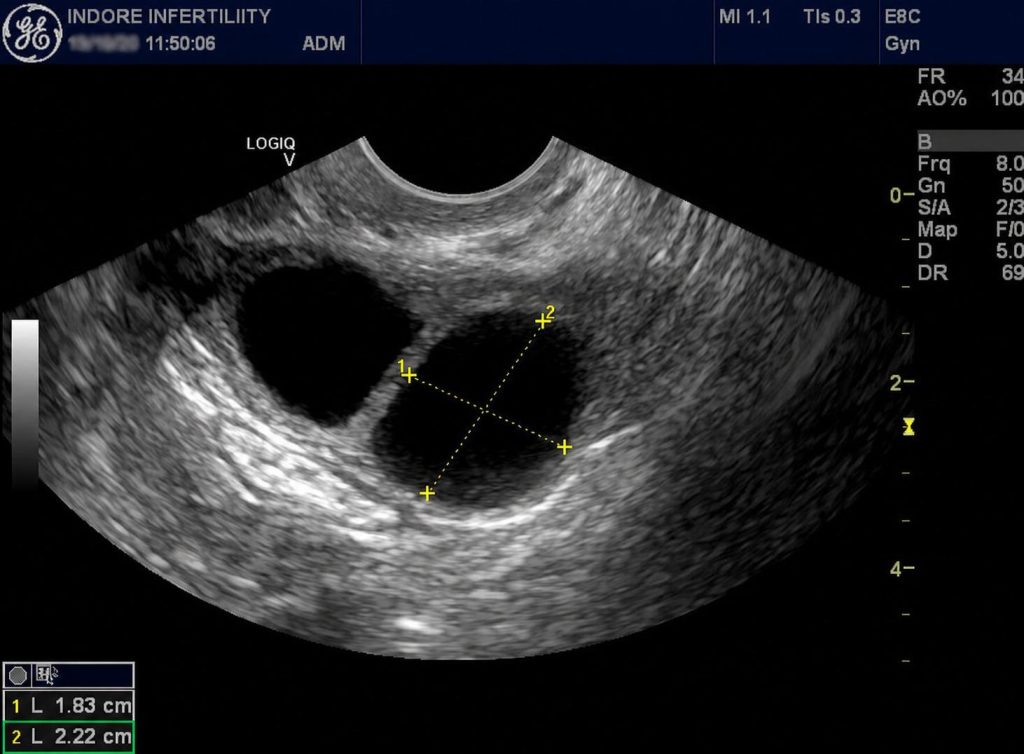
The response was poor. Only two oocyte-cumulus complexes were retrieved. One egg was immature. The other fertilized, but the embryo reached only the 3 to 4-cell stage on Day 3. It was a slow-growing embryo — and on paper, it did not look very encouraging.
But because the couple had already been counselled about a possible poor outcome, this moment did not feel like the end of the road.
Why Embryo Pooling Made Sense Here
Embryo pooling simply means doing more than one stimulation cycle, preserving whatever embryos are formed, and then planning the transfer when we have slightly better numbers to choose from. It is not needed for every patient.
But in selected women with very poor ovarian reserve, it can make all the difference — because one IVF cycle may give very few eggs or embryos to work with.
- One cycle may yield only 1–2 eggs, limiting the chance of forming a high-quality blastocyst
- Pooling embryos from 2–3 cycles gives more to choose from at the time of transfer
- Frozen embryo transfer (FET) often results in better uterine receptivity than a fresh transfer
- For couples planning future pregnancies, pooling preserves remaining reproductive potential
This patient also had a very personal concern. She was anxious her ovarian reserve would reduce further with age, and she had always hoped for more than one child. So the couple chose not to rush. They chose to try one more stimulation cycle.
IVF Cycle 2: A Changed Plan, A Better Response
Second Stimulation — Long Agonist Protocol
The very next month, we changed the stimulation strategy and used a long agonist protocol. This time, the response was better:
| Oocytes Retrieved | 4 oocyte-cumulus complexes |
| Mature Oocytes | 3 |
| Fertilized | All 3 |
| Day 3 Embryos Frozen | 2 (Grade A + Grade B) |
For the couple, this was the first real moment of hope. Not loud hope. Not dramatic hope. Just quiet, careful hope. Maybe this could work. Every time they asked, our embryologist met with them, explained the embryo grading, and discussed their realistic chances.
Planning the Frozen Embryo Transfer Carefully
November 2020 — FET Cycle
After two months, the couple returned for frozen embryo transfer in November 2020. Considering the patient’s short stature, and our preference to reduce the risk of twin pregnancy, we planned a single embryo transfer.
We had embryos frozen at Day 3 stage. So we cultured them further from Day 3 to Day 5 to select the one showing better developmental potential.
We transferred the Grade A blastocyst. The couple consulted our embryology team to understand the possibility of refreezing the second embryo — even though it was graded B, they chose to freeze it again for future use.
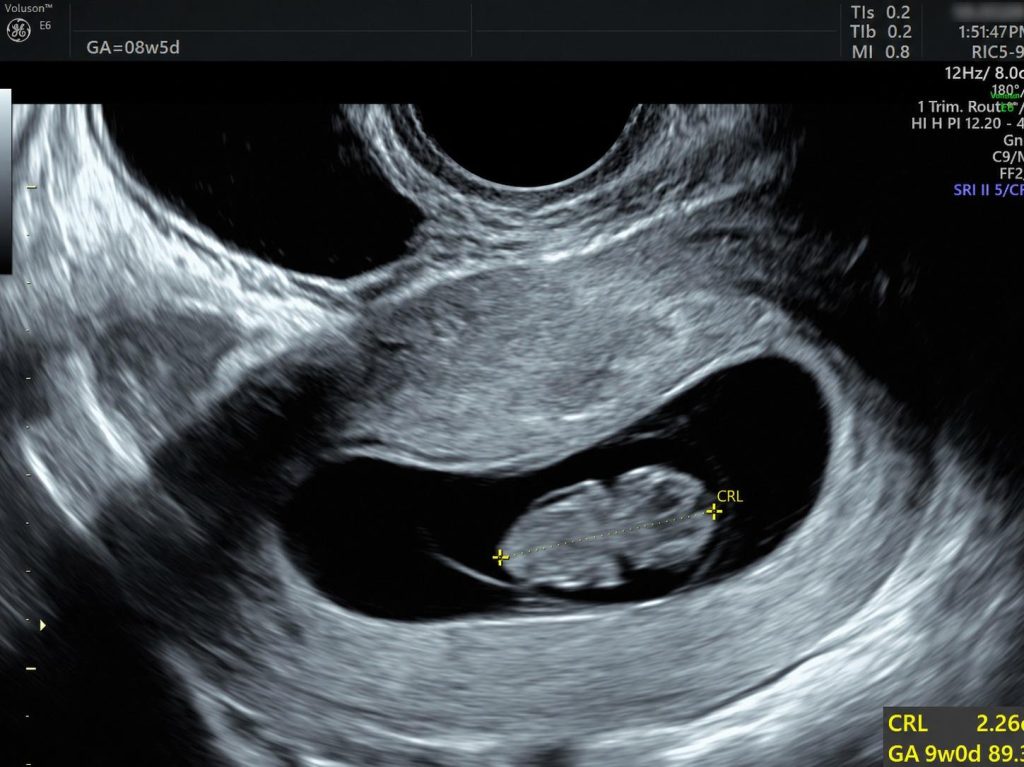
That transfer resulted in pregnancy. The pregnancy progressed well, without major complications. Nine months later, she delivered a healthy baby by C-section.
Five Years Later: One Frozen Embryo Still Mattered
Almost five years later, in 2025, she came back. This time only the wife came — she had built a personal connection with our embryologist over the years. By then, she was around 41.
She was deeply spiritual, a follower of Krishna and ISKCON philosophy. She first asked us about the procedure for discarding embryos that patients do not use. After understanding the process, she told us something very clearly: they were not desperate for a second child. But they also could not bring themselves to discard the remaining frozen embryo — it felt, to her, against the will of God and nature.
She wanted to know whether a B-grade blastocyst — after being frozen, warmed, refrozen, and warmed again — could still have any chance.
We told her the truth. The chance may be lower — the embryo grade was lower, she was older now, and the embryo had been through more than one freeze-thaw cycle. But when an embryo is viable, we cannot say there is no chance.
Science can guide us. But life can still surprise us.
She decided to transfer the embryo and leave the result to God, nature, and biology. After the transfer, she said she felt at peace — not because she expected a positive result, but because she had given it a chance rather than ending it.
Honestly, we were not expecting much either.
But miraculously, she conceived again.
The pregnancy was uneventful. And nine months later, she delivered her second baby.
Two Embryos. Two Children.
That is the power of individualized IVF planning. Not every patient with low AMH will have the same outcome — it would be wrong to promise that. But this story reminds us of something deeply humbling: nature has its own timing.
- Honest counselling from day one — so the couple knew what to expect at every step
- Embryo pooling across two cycles — instead of rushing a transfer with too little
- Single embryo transfer — the right call for her health and safety
- Respecting the couple’s choice to refreeze and not discard the Grade B blastocyst
- Five years of patience — and one more honest chance given to a Grade B embryo
The right egg, at the right time, with the right sperm, can form the right embryo. And sometimes, no matter how we label them Grade A or Grade B, life has its own quiet plan waiting to surprise us.
What Patients Can Learn from This Story
If you have low AMH, poor ovarian reserve, or a poor sperm count, IVF needs careful planning. The goal is not to blindly repeat cycles. The goal is not to transfer multiple embryos just to improve numbers on paper. The goal is to understand your exact situation.
Some questions worth discussing with your specialist:
- How many eggs are we likely to get from one cycle?
- Does embryo pooling make sense for my case?
- How severe is the sperm factor? Is ICSI needed?
- Should we grow embryos to Day 5 blastocyst before transfer?
- Is single embryo transfer safer for me?
- I have a frozen embryo I cannot bring myself to discard — what are my real options?
Frequently Asked Questions
Can I get pregnant with AMH 0.5?
Yes, it is possible — though the chances are lower and the treatment plan needs to be tailored carefully. AMH 0.5 ng/ml means your ovarian reserve is very low, which means fewer eggs per stimulation cycle. But fewer eggs does not mean zero eggs, and zero eggs does not mean zero chance. In the right hands, with the right protocol and the patience to do embryo pooling across more than one cycle, pregnancy is achievable. The patient in this story had AMH 0.5. She has two children today.
What is embryo pooling in IVF?
Embryo pooling means doing more than one stimulation cycle, freezing whatever embryos you get from each, and planning the transfer once you have a better selection to work with. It is not for every patient — but for women with very poor ovarian reserve or low AMH, one cycle may simply not give enough to transfer. Pooling gives you more options at the time of transfer and, in many cases, a better chance of success. Pooling should also be considered as a strategy for preserving future fertility in case one wishes to have more than one child.
Is a frozen embryo transfer as successful as a fresh transfer?
In many situations, yes. Frozen embryo transfer (FET) gives the uterus time to recover from the stimulation medications, which often means better conditions for implantation. It also allows the team to pick the best timing for the transfer, rather than working around the stimulation cycle. Both pregnancies in this story came from frozen embryo transfers.
Can a B-grade blastocyst result in a successful pregnancy?
Yes. Embryo grading is a tool — it helps us decide which embryo to transfer first. But a Grade B blastocyst is not a failed embryo. It is a lower-priority embryo. In this case, a Grade B blastocyst that had been frozen, warmed, refrozen, and warmed again — nearly five years after it was first created — resulted in a healthy baby. Grading guides our decisions. It does not make them for us.
What is ICSI and when is it needed?
ICSI (Intracytoplasmic Sperm Injection) is a technique used in IVF where a single sperm is injected directly into an egg. It is recommended when the male partner has a low sperm count, poor motility, or abnormal morphology — what is clinically called OATS. In this couple’s case, the husband’s sperm count was around 2 million with 30% motility, making ICSI the right approach for fertilization.
How long can embryos be safely frozen?
Embryos can be frozen safely for many years. The second child in this story was born from an embryo that was frozen for nearly five years. Vitrification — the rapid freezing technique used today — preserves embryos extremely well. There is no fixed expiry for a vitrified embryo, though individual clinic policies and legal guidelines may apply.
Final Message
This story is not only about luck.
It is about a couple who came with fear, failed attempts at conception, low AMH, and severe male factor infertility. It is about science. It is about patience. It is about faith. It is about timing.
And above all, it is about respecting every embryo and every decision.
For this couple, one careful decision in 2020 gave them their first child. One frozen embryo, waiting quietly for years, and another careful decision, gave them their second.
| INDORE INFERTILITY CLINIC | Real Patient Stories | Hope. Science. Family. |
The Embryo That Waited
A Real IVF Success Story: Low AMH 0.5, Severe Male Factor Infertility, Two Pregnancies, Two Children
IVF with low AMH
• Embryo pooling • Frozen embryo transfer • IVF success with poor ovarian reserve • Best IVF clinic Indore| “These are real patient stories, shared without names but with their stories intact. Each story shows how hope often rewards those who find the courage to keep going.” |
Patient Profile at the Start of Treatment
It was during the COVID period, after the second lockdown, when this couple first came to us. They were not looking for a routine consultation. They specifically wanted to speak to the embryologist which is unusual, because we usually work quietly in the lab, away from the spotlight. But when a couple comes looking for answers directly from the lab, how do you say no? Their case, on paper, was difficult:| Wife, Age | 36 years |
| AMH (Ovarian Reserve) | 0.5 ng/ml (severely low) |
| AFC | Very low antral follicle count |
| Husband, Age | 39 years |
| Sperm Count | ~2 million (severe male factor) |
| Sperm Motility | 30% (OATS – Oligoasthenoteratospermia) |
“What are our actual chances of having a baby with IVF?”
Not vague hope. Not generic reassurance. They wanted to know the actual odds for their actual case. So we gave them the honest answer. The chances were on the lower side. One stimulation cycle might not be enough given her reserve and his sperm count. We explained that we may need to collect embryos over more than one cycle before planning a transfe, an approach called embryo pooling. They took a few nights to think. A week later, they came back. Not with blind optimism. With quiet determination. They wanted to try their best.IVF Cycle 1: Very Few Eggs, Very Little Hope on Paper
August 2020 First Stimulation
The response was poor. Only two oocyte-cumulus complexes were retrieved. One egg was immature. The other fertilized, but the embryo reached only the 3 to 4-cell stage on Day 3. It was a slow-growing embryo and on paper, it did not look very encouraging. But because the couple had already been counselled about a possible poor outcome, this moment did not feel like the end of the road.| We had discussed embryo pooling with them earlier. So instead of rushing into a transfer, we froze that Day 3 embryo and planned another stimulation cycle this time with a different protocol. When expectations are set properly from the start, a second stimulation doesn’t feel like failure. It feels like part of the plan. |
Why Embryo Pooling Made Sense Here
Embryo pooling simply means doing more than one stimulation cycle, preserving whatever embryos are formed, and then planning the transfer when we have slightly better numbers to choose from. It is not needed for every patient.
But in selected women with very poor ovarian reserve, it can make all the difference because one IVF cycle may give very few eggs or embryos to work with.
- One cycle may yield only 1-2 eggs, limiting the chance of forming a high-quality blastocyst
- Pooling embryos from 2-3 cycles gives more to choose from at the time of transfer
- Frozen embryo transfer (FET) often results in better uterine receptivity than a fresh transfer
- For couples planning future pregnancies, pooling preserves remaining reproductive potential
This patient also had a very personal concern. She was anxious her ovarian reserve would reduce further with age, and she had always hoped for more than one child. So the couple chose not to rush. They chose to try one more stimulation cycle.
IVF Cycle 2: A Changed Plan, A Better Response
Second Stimulation Long Agonist Protocol
The very next month, we changed the stimulation strategy and used a long agonist protocol. This time, the response was better:| Oocytes Retrieved | 4 oocyte-cumulus complexes |
| Mature Oocytes | 3 |
| Fertilized | All 3 |
| Day 3 Embryos Frozen | 2 (Grade A + Grade B) |
Planning the Frozen Embryo Transfer Carefully
November 2020 FET Cycle
After two months, the couple returned for frozen embryo transfer in November 2020. Considering the patient’s short stature, and our preference to reduce the risk of twin pregnancy, we planned a single embryo transfer. We had embryos frozen at Day 3 stage. So we cultured them further from Day 3 to Day 5 to select the one showing better developmental potential.| To our surprise, both embryos from the second cycle reached the blastocyst stage. One became a Grade A blastocyst. One became a Grade B blastocyst. |
Five Years Later: One Frozen Embryo Still Mattered
Almost five years later, in 2025, she came back. This time only the wife came she had built a personal connection with our embryologist over the years. By then, she was around 41. She was deeply spiritual, a follower of Krishna and ISKCON philosophy. She first asked us about the procedure for discarding embryos that patients do not use. After understanding the process, she told us something very clearly: they were not desperate for a second child. But they also could not bring themselves to discard the remaining frozen embryo it felt, to her, against the will of God and nature.| “To her, that embryo had meaning. It felt like life waiting quietly.” |
Two Embryos. Two Children.
| This couple began with AMH 0.5 ng/ml, very low AFC, and severe male factor infertility (OATS). On paper, the first IVF cycle gave very little hope. But they did not stop after one disappointing response. They chose embryo pooling. They waited. They trusted the process. And in time, two transferred blastocysts became two children. |
- Honest counselling from day one so the couple knew what to expect at every step
- Embryo pooling across two cycles instead of rushing a transfer with too little
- Single embryo transfer the right call for her health and safety
- Respecting the couple’s choice to refreeze and not discard the Grade B blastocyst
- Five years of patience and one more honest chance given to a Grade B embryo
What Patients Can Learn from This Story
If you have low AMH, poor ovarian reserve, or a poor sperm count, IVF needs careful planning. The goal is not to blindly repeat cycles. The goal is not to transfer multiple embryos just to improve numbers on paper. The goal is to understand your exact situation. Some questions worth discussing with your specialist:- How many eggs are we likely to get from one cycle?
- Does embryo pooling make sense for my case?
- How severe is the sperm factor? Is ICSI needed?
- Should we grow embryos to Day 5 blastocyst before transfer?
- Is single embryo transfer safer for me?
- I have a frozen embryo I cannot bring myself to discard what are my real options?
| Sometimes, IVF success does not come from doing more. It comes from doing the right thing, at the right time. |
Frequently Asked Questions
Yes, it is possible though the chances are lower and the treatment plan needs to be tailored carefully. AMH 0.5 ng/ml means your ovarian reserve is very low, which means fewer eggs per stimulation cycle. But fewer eggs does not mean zero eggs, and zero eggs does not mean zero chance. In the right hands, with the right protocol and the patience to do embryo pooling across more than one cycle, pregnancy is achievable. The patient in this story had AMH 0.5. She has two children today.
Embryo pooling means doing more than one stimulation cycle, freezing whatever embryos you get from each, and planning the transfer once you have a better selection to work with. It is not for every patient but for women with very poor ovarian reserve or low AMH, one cycle may simply not give enough to transfer. Pooling gives you more options at the time of transfer and, in many cases, a better chance of success. Pooling should also be considered as a strategy for preserving future fertility in case one wishes to have more than one child.
In many situations, yes. Frozen embryo transfer (FET) gives the uterus time to recover from the stimulation medications, which often means better conditions for implantation. It also allows the team to pick the best timing for the transfer, rather than working around the stimulation cycle. Both pregnancies in this story came from frozen embryo transfers.
Yes. Embryo grading is a tool it helps us decide which embryo to transfer first. But a Grade B blastocyst is not a failed embryo. It is a lower-priority embryo. In this case, a Grade B blastocyst that had been frozen, warmed, refrozen, and warmed again nearly five years after it was first created resulted in a healthy baby. Grading guides our decisions. It does not make them for us.
ICSI (Intracytoplasmic Sperm Injection) is a technique used in IVF where a single sperm is injected directly into an egg. It is recommended when the male partner has a low sperm count, poor motility, or abnormal morphology what is clinically called OATS. In this couple’s case, the husband’s sperm count was around 2 million with 30% motility, making ICSI the right approach for fertilization.
Embryos can be frozen safely for many years. The second child in this story was born from an embryo that was frozen for nearly five years. Vitrification the rapid freezing technique used today preserves embryos extremely well. There is no fixed expiry for a vitrified embryo, though individual clinic policies and legal guidelines may apply.
Final Message
This story is not only about luck. It is about a couple who came with fear, failed attempts at conception, low AMH, and severe male factor infertility. It is about science. It is about patience. It is about faith. It is about timing. And above all, it is about respecting every embryo and every decision. For this couple, one careful decision in 2020 gave them their first child. One frozen embryo, waiting quietly for years, and another careful decision, gave them their second.|
Indore Infertility Clinic • Hope. Science. Family.
IVF |
ICSI |
Embryo Freezing |
Frozen Embryo Transfer |
Male Infertility Treatment
|