Are you struggling with PCOS and wondering if IVF is the right option for you? If you’re living in Indore and looking for fertility solutions, you’ve come to the right place. PCOS (Polycystic Ovary Syndrome) affects a significant number of women in their reproductive years, and the good news is that modern IVF treatments have transformed the way we approach fertility for women with this condition.
At our Indore infertility clinic, we’ve helped hundreds of women with PCOS achieve their dream of motherhood. In this comprehensive guide, we’ll walk you through everything you need to know about IVF with PCOS, success rates, treatment options, and why seeking treatment at a specialized fertility center in Indore can make all the difference.
Understanding PCOS and Infertility
PCOS is one of the most common hormonal disorders affecting women of reproductive age. Did you know that 1 in 5 to 1 in 4 women in India have PCOS? It’s a condition characterized by irregular or absent ovulation, hormonal imbalances, and the development of multiple small cysts on the ovaries.
The challenge with PCOS is that it disrupts the normal ovulation cycle, making natural conception difficult. Many women with PCOS experience irregular periods, which means their bodies aren’t releasing eggs regularly. This is where IVF becomes a game-changer. Unlike natural conception or other fertility treatments, IVF bypasses the ovulation problems and directly retrieves and fertilizes eggs in the laboratory.
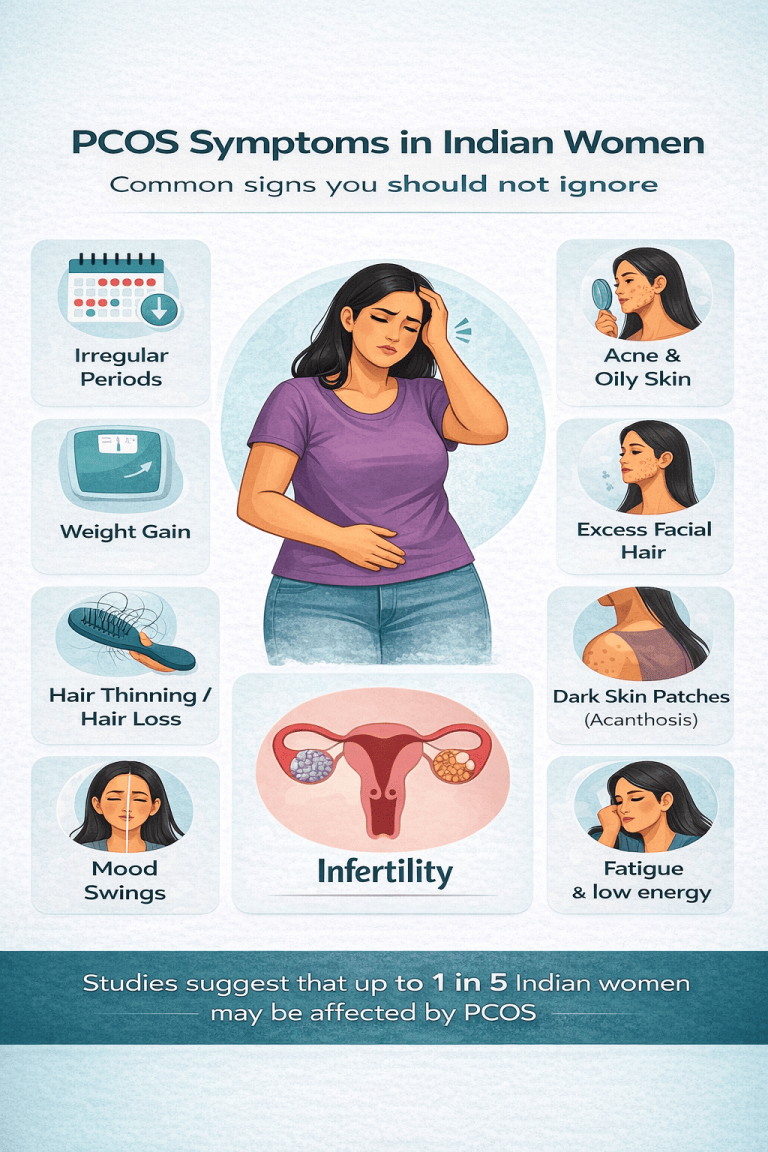
Common Symptoms of PCOS You Might Experience:
- Irregular or absent periods
- Difficulty conceiving naturally
- Excessive hair growth on face and body
- Acne and skin darkening
- Weight gain and difficulty losing weight
IVF Success Rates for Women with PCOS
One of the most encouraging facts about PCOS and IVF is that women with PCOS often have surprisingly good success rates with IVF treatment. This might seem counterintuitive, but here’s why: women with PCOS typically have multiple eggs available in their ovaries.
According to recent fertility studies, women with PCOS undergoing IVF have a success rate of 60-70% per cycle, especially when they are under 35 years of age. For comparison, the overall IVF success rate in India ranges from 50-75%, which means PCOS patients can often achieve comparable or even better results.
Factors That Influence IVF Success with PCOS:
- Age: Women under 35 have significantly higher success rates (50-70%) compared to those over 40 (15-20%)
- Egg Quality: While quantity is usually good in PCOS, quality can be variable
- BMI and Weight Management: Maintaining a healthy weight improves ovarian response and treatment outcomes
- Hormonal Control: Proper management of insulin resistance and hormone levels
- Clinic Experience: Choosing an experienced Indore infertility clinic with expertise in PCOS management
The IVF Treatment Process for PCOS: Step-by-Step
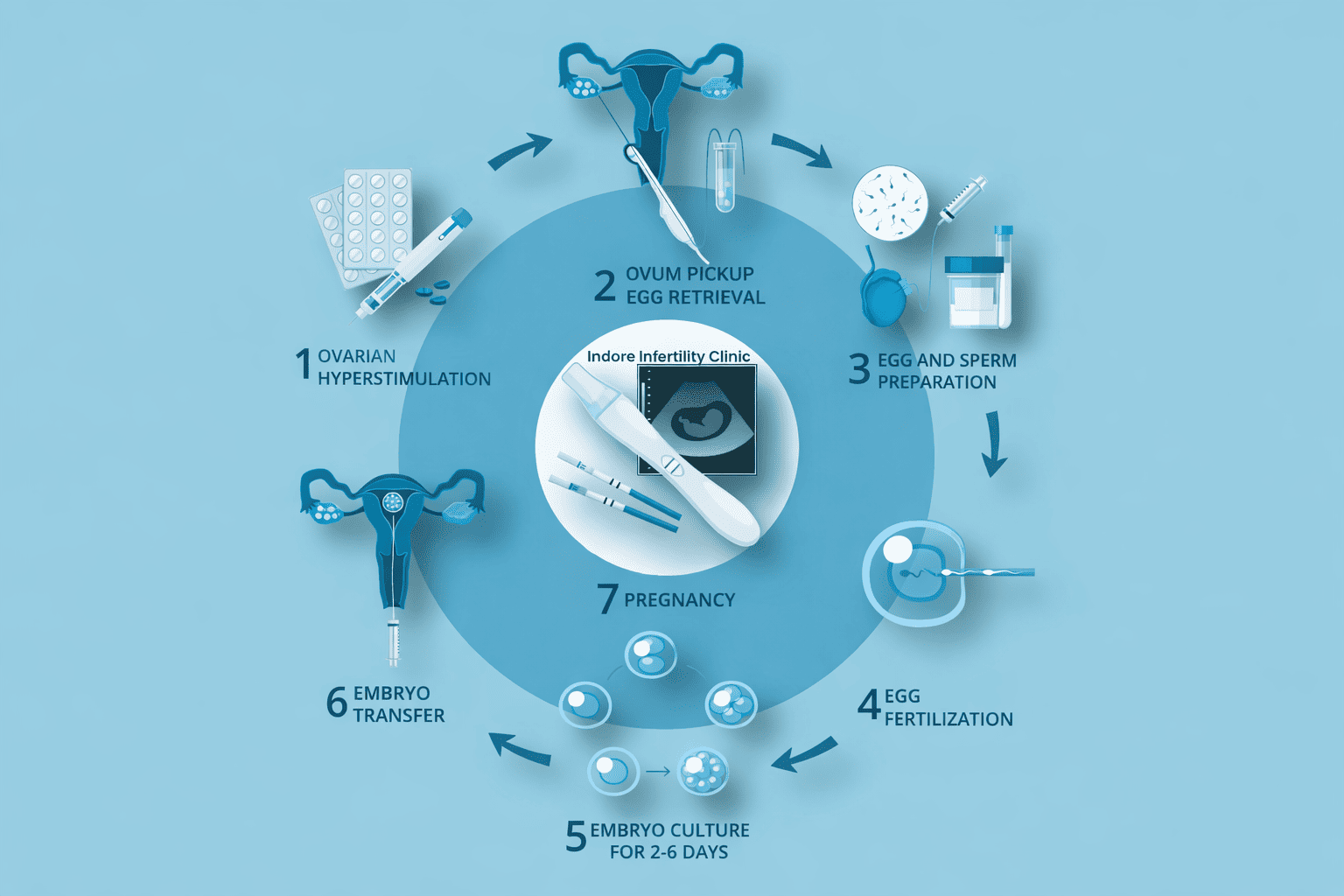
If you’ve decided to pursue IVF at our Indore infertility clinic, here’s what you can expect throughout the treatment journey. Understanding each step can help reduce anxiety and prepare you mentally and physically for the process.
Step 1: Initial Consultation and Evaluation
Your journey begins with a thorough consultation. Our fertility specialists will review your medical history, conduct a physical examination, and order diagnostic tests including blood work and ultrasound. For women with PCOS, we specifically check AMH (Anti-Müllerian Hormone) levels to assess ovarian reserve, insulin levels, and thyroid function. This helps us create a personalized treatment plan tailored to your specific needs.Step 2: Ovarian Stimulation (10-12 Days)
This is where IVF with PCOS requires special attention. Women with PCOS are at higher risk of a condition called Ovarian Hyperstimulation Syndrome (OHSS), so we use modified protocols. Instead of high hormone doses, we use lower, more controlled doses to stimulate the ovaries to produce multiple eggs without overdoing it. You’ll give yourself daily injections at home, and we’ll monitor your progress with blood tests and ultrasounds every 2-3 days.
Step 3: Egg Retrieval
Once the eggs are mature, we perform a minor procedure to retrieve them. This is done under light anesthesia and takes about 20-30 minutes. Women with PCOS often have many eggs retrieved (sometimes 15-20 or more), which gives us more options and increases your chances of successful fertilization and embryo development.Step 4: Fertilization and Embryo Culture
In our laboratory, eggs are fertilized with sperm. The fertilized eggs develop into embryos over 3-5 days. We culture them in specialized media and monitor their development daily. We select the best-quality embryos for transfer, which significantly improves success rates. Many women with PCOS have multiple good-quality embryos, giving us options for this cycle and potentially for future pregnancies through frozen embryo transfer.
Step 5: Embryo Transfer
This is a simple procedure done without anesthesia. Using ultrasound guidance, we place one or two healthy embryos into your uterus. The remaining good-quality embryos can be frozen for future use. After transfer, you’ll rest for a few hours and can return home.Step 6: The Two-Week Wait and Pregnancy Testing
This is often the most anxious period. We ask you to avoid strenuous activity and maintain a healthy lifestyle. Two weeks after embryo transfer, you’ll come back for a blood test to check for pregnancy hormones (beta-hCG). This is the official confirmation of pregnancy.
Special Considerations for PCOS Patients
Women with PCOS need specialized care during IVF treatment. Here’s what makes treatment at our Indore infertility clinic different and more effective for PCOS patients.OHSS (Ovarian Hyperstimulation Syndrome) Prevention
Women with PCOS have a higher risk of OHSS because they respond more vigorously to hormonal stimulation. Our clinic uses proven strategies to minimize this risk: lower hormone doses, careful monitoring with frequent ultrasounds and blood work, and the ‘freeze-all’ approach when necessary. This means we retrieve and freeze all embryos, then transfer them in a later cycle when your body has recovered. While this delays pregnancy by a few months, it significantly reduces OHSS risk and improves overall success rates.Managing Insulin Resistance
Many women with PCOS have insulin resistance, which can impact fertility. We often recommend pre-treatment with Inositol supplements and Metformin to improve insulin sensitivity. Weight loss of even 5-10% can dramatically improve both natural fertility and IVF outcomes. Our clinic provides nutritional counseling and lifestyle guidance to support these improvements.Vitamin D and Micronutrient Support
Research shows that Vitamin D deficiency is common in women with PCOS and can negatively impact fertility. We typically recommend checking Vitamin D levels and supplementing if needed. We also assess and supplement other important nutrients like CoQ10, which supports egg quality.IVF Cost for PCOS Treatment in Indore
One major advantage of seeking treatment at our Indore infertility clinic is the significantly lower cost compared to major metropolitan centers like Delhi or Mumbai. Let’s break down the costs transparently so there are no surprises.Basic IVF Cycle Cost Breakdown:
| Treatment Component | Cost (INR) |
| Consultation & Diagnostics | ₹5,000 – ₹8,000 |
| Ovarian Stimulation (Hormones & Monitoring) | ₹40,000 – ₹60,000 |
| Egg Retrieval & Lab Procedures | ₹35,000 – ₹50,000 |
| Embryo Transfer | ₹15,000 – ₹25,000 |
| TOTAL BASIC IVF CYCLE | ₹1,75,000 – ₹2,00,000 |
Why Choose Our Indore Infertility Clinic?
There are several reasons why couples choose our fertility center for PCOS treatment in Indore.
- PCOS Specialization: Our fertility specialists have years of experience specifically treating women with PCOS, with success rates among the highest in Central India
- Advanced Laboratory: Our state-of-the-art embryology lab is equipped with latest technology for optimal embryo development
- Comprehensive Counseling: We provide psychological support and counseling to help you navigate the emotional aspects of infertility treatment
- Affordable Treatment: Costs are significantly lower than metro cities without compromising quality
- Nutritional & Lifestyle Support: We provide customized nutrition plans and lifestyle coaching to optimize outcomes
- Transparent Communication: We believe in honest, transparent discussions about expectations and outcomes
Frequently Asked Questions About IVF with PCOS
Yes, absolutely. Many women with PCOS do conceive naturally, especially with lifestyle modifications like weight loss and regular exercise. However, if natural conception hasn't occurred after 1-2 years of trying, or if you're over 35, IVF is often recommended as it offers significantly higher success rates.
No, not necessarily. While women with PCOS have a higher risk, modern protocols at our Indore infertility clinic are specifically designed to prevent OHSS. We use lower hormone doses, frequent monitoring, and specialized trigger methods. Severe OHSS is rare when treated by experienced specialists.
Not necessarily. While women with PCOS may have slightly higher rates of poor-quality eggs compared to non-PCOS women, the vast majority of their eggs are normal and healthy. The advantage is that PCOS typically produces many eggs, so we have many to choose from. This often compensates for any quality concerns.
From your first consultation to the pregnancy test takes approximately 4-6 weeks. Initial evaluation and testing take 1-2 weeks, ovarian stimulation takes 10-12 days, egg retrieval happens a few days later, and embryo transfer occurs 3-5 days after retrieval. The two-week wait to pregnancy testing completes the cycle.
The basic IVF costs are similar. However, PCOS treatment might require additional pre-treatment with supplements (Inositol, Metformin, Vitamin D) and possibly additional monitoring. At our Indore infertility clinic, we clearly communicate all potential costs upfront so there are no surprises.
Pre-IVF preparation for PCOS includes: weight management if you're overweight (5-10% weight loss can significantly improve outcomes), taking recommended supplements (Inositol, Vitamin D, CoQ10), managing stress through meditation or yoga, avoiding smoking and alcohol, maintaining regular exercise, and having nutritional counseling. We provide detailed guidance on all these aspects.
Yes, and many PCOS patients benefit from frozen embryo transfer (FET). The freeze-all strategy involves retrieving all eggs, freezing all resulting embryos, and transferring in a later cycle. This allows your body to recover from ovarian stimulation, reduces OHSS risk, and improves implantation success. Many PCOS patients have excellent success with FET.
While PCOS patients often achieve pregnancy in their first cycle, statistics show that about 30-40% need 2-3 cycles. The good news is that if you have leftover frozen embryos from your first cycle, subsequent transfers are much less expensive (₹30,000-₹40,000 vs full cycle costs). Our success rates mean many patients don't need multiple full cycles.
Once pregnancy is achieved, the risks are similar to non-PCOS pregnancies. However, women with PCOS do have slightly higher rates of gestational diabetes and pregnancy-related complications. This is why we recommend continued close monitoring during pregnancy and working with maternal-fetal medicine specialists.